What we looked at
-
 Lowest price
Libre Computer Le Potato Mini Single Board Computer with USB WiFi…
9.0/10
See price
-
 Orange Pi 4 Pro 4GB LPDDR5 8 Core 64 Bit Single…
7.2/10
See price
-
 Highest rated
Raspberry Pi 5 4GB Kit, 4GB RAM Single Board Computer with…
9.2/10
See price
-
 Reviewed here
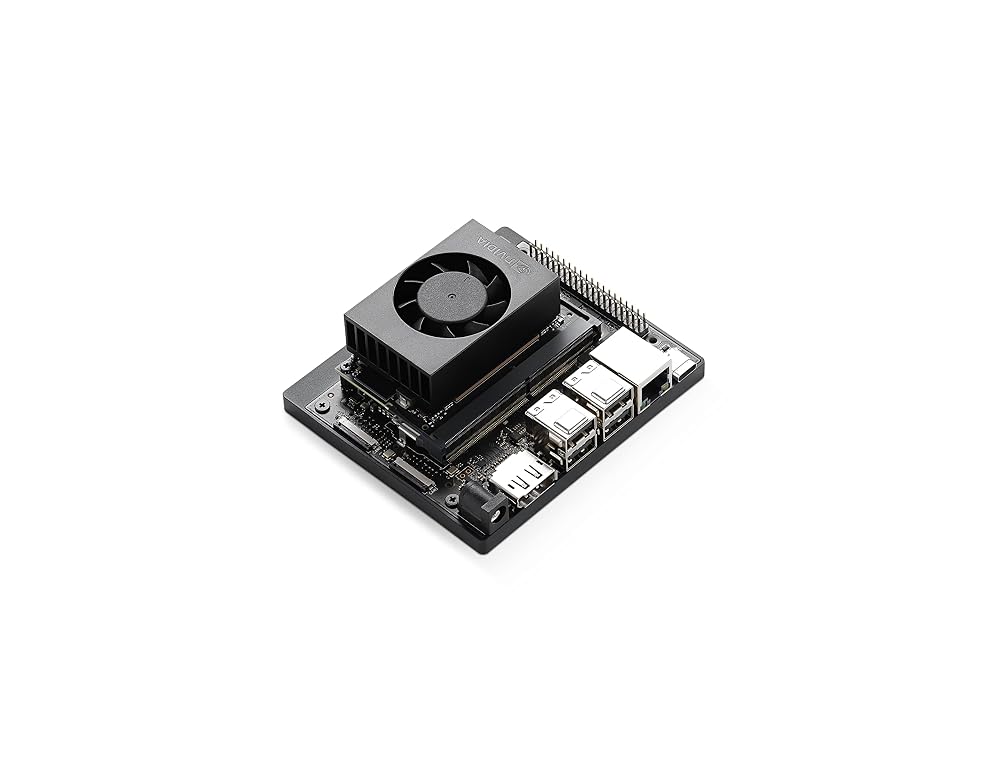
NVIDIA Jetson Orin Nano Super Developer Kit
8.6/10
See price
As Amazon Associates, we earn from qualifying purchases. This means we may receive a small commission at no extra cost to you if you click through and make a purchase.
Parents, educators, and makers exploring robotics often run into a common roadblock when working with standard single-board computers: traditional hobbyist boards struggle as soon as you introduce live computer vision, multi-camera tracking, or complex neural networks. The NVIDIA Jetson Orin Nano addresses this gap directly by delivering genuine edge computing power on a compact development board. Designed specifically for autonomous machines, computer vision tasks, and practical experimentation, it offers an approachable yet capable hardware platform for learners who have outgrown standard microcontrollers and want to build modern, intelligent hardware setups at home or in a classroom lab. Even when casually referred to by hobbyists as the nvidia orion nano, this platform represents a distinct leap into serious edge AI computing for families committed to hands-on learning.
When evaluating if the nvidia jetson orin nano is worth it for family learning, the verdict comes down to longevity and software depth. While the board demands a steeper learning curve than basic consumer electronics, its modular reference carrier board and dedicated Ampere architecture provide unmatched runway for growth. If your goal is discovering whether the hardware can sustain multiple semesters of advanced learning, our assessment confirms that its flexible architecture, robust connector layout, and official software ecosystem deliver meaningful staying power for ambitious makers.


Quick Verdict
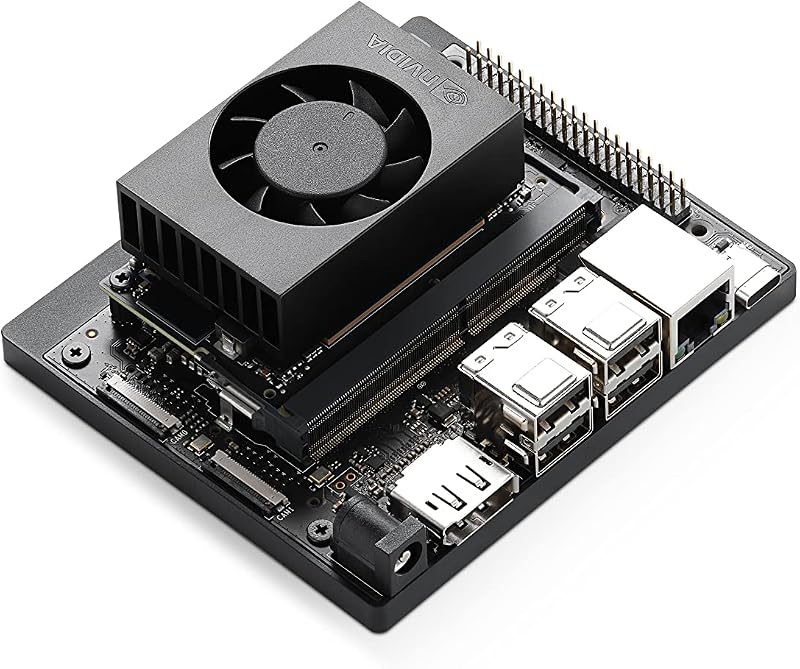
The NVIDIA Jetson Orin Nano is an exceptional edge AI platform that pairs an Ampere GPU with a 6-core ARM CPU to give students and developers a dependable path into modern robotics. While it requires dedicated setup time and external storage planning compared to plug-and-play microcomputers, its modular architecture makes it built to last across evolving STEM projects.
- Ampere architecture GPU delivering up to 40 TOPS of AI performance for vision and robotics models.
- Jetson Orin Nano 8GB module mounted on a flexible reference carrier board that supports future module upgrades.
- Rich physical connectivity including 5 total USB ports, DisplayPort, Ethernet, and a standard GPIO header.
- Extensive native software support through NVIDIA Isaac, DeepStream, and Riva application frameworks.
NVIDIA Jetson Orin Nano Features Explained
Ampere GPU Architecture and Compute Performance
At the center of the hardware sits an NVIDIA Ampere architecture GPU paired with a 6-core ARM Cortex-A78AE v8.2 processor. This combination enables the board to reach up to 40 TOPS of AI performance, providing the necessary horsepower to process multiple neural networks concurrently. In contrast to entry-level microcontrollers that process single sensor streams sequentially, this system processes live video feeds, runs object detection pipelines, and executes real-time spatial calculations without bogging down the main system bus. This capability is where jetson orin nano ai performance truly shines, enabling responsive robotics rather than delayed image capture.
This computing capability directly benefits families and makers focusing on autonomous machinery. Whether handling vision transformers or running conversational agents locally, the board avoids the latency and recurring subscription ties of cloud-dependent solutions. For advanced computing contexts, enthusiasts often look at workstation designs like the nvidia rtx 6000, but having Ampere-grade architecture in a compact 6-inch by 3-inch profile allows students to test serious machine learning concepts right at the desktop workstation.
Jetson Orin Nano 8GB Module and System Memory
Memory capacity is often the primary bottleneck for machine learning on edge hardware, but the Jetson Orin Nano 8GB configuration provides the headroom necessary for multi-modal workloads. Featuring 8 GB of LPDDR4X system memory, the platform allows the CPU and GPU to share resources fluidly. This shared pool is essential when loading neural network weights, processing high-definition camera buffers, and running background operating system tasks simultaneously.
For educational environments, having this memory buffer means students can transition from simple toy datasets to production-grade neural networks without encountering immediate out-of-memory crashes. Whether training custom classifiers or running pre-trained models for object recognition, the 8 GB capacity ensures that the developer kit remains a practical learning tool rather than a frustrating technical constraint.
Modular Reference Carrier Board
One of the strongest durability features of the kit is its two-part physical architecture. The system comprises an Orin Nano compute module seated directly on an adaptable reference carrier board. Because the carrier board accommodates all Orin Nano and Orin NX modules, the entire platform provides a durable foundation that will not become obsolete when a project demands a faster compute module down the road. Instead of discarding the whole hardware assembly, makers can keep their wiring, sensors, and carrier base intact.
This physical modularity protects your initial investment across years of experimentation. The carrier board routes out essential interfaces, including 5 total USB ports, a dedicated Ethernet jack, DisplayPort video output, and standard GPIO pins for sensor wiring. This modular approach mirrors enterprise-level modular designs seen in systems such as the nvidia dgx spark mini pc, making the Orin Nano an authentic educational bridge to industrial hardware design and rapid prototyping.
NVIDIA AI Software Stack and Specialized Frameworks
Hardware is only as effective as the software driving it, and the Orin Nano runs on the official NVIDIA AI software stack running atop a specialized Linux operating system. This software foundation provides direct access to optimized frameworks like NVIDIA Isaac for robotics, DeepStream for vision AI, and Riva for conversational speech tasks. Rather than coding computer vision routines from scratch, students can implement optimized detection pipelines that leverage the full capability of the onboard tensor processing hardware.
Additionally, the ecosystem includes tools like NVIDIA Omniverse Replicator for synthetic data generation. This allows young roboticists and students to train algorithms on simulated scenarios before deploying their code to physical robots. Having access to these comprehensive software tools helps bridge the gap between academic theory and practical engineering, ensuring that time spent learning this system translates directly into industry-standard technical skills.
Physical Connectivity and Robotics Sensor Expansion
Physical integration is vital for hands-on learning, and the board provides generous physical interfaces to support complex robotics rigs. With five total USB ports, the board readily accepts multiple depth cameras, lidar units, game controllers, and programming peripherals at the same time. The gigabit Ethernet interface ensures stable network communication for telemetry or streaming high-bandwidth camera feeds, while the 40-pin GPIO array allows straightforward attachment to motor controllers, relays, and environmental sensors.
The board also features Bluetooth wireless capability, making it straightforward to pair wireless input devices, remote telemetry sensors, or mobile diagnostic tools without running extra cables. This well-rounded connectivity means you will rarely need to juggle USB hubs or compromise on sensor inputs when assembling multi-stage robotics rigs or smart classroom automation projects.
Specs
A closer look at the nvidia jetson orin nano specs reveals a balanced architecture engineered specifically for edge AI deployment and interactive development.
| Attribute | Detail |
|---|---|
| Brand | NVIDIA |
| Model Name | Jetson Orin Nano 8GB |
| CPU Model | 6-core ARM Cortex-A78AE v8.2 |
| AI Compute Performance | Up to 40 TOPS |
| RAM Memory Installed | 8 GB LPDDR4X |
| Storage Memory Capacity | 8 GB |
| Operating System | Linux |
| Connectivity Ports | 5 Total USB, DisplayPort, Ethernet, GPIO |
| Wireless Compatibility | Bluetooth |
| Item Dimensions | 6″L x 3″W x 8″H |
NVIDIA Jetson Orin Nano Pros and Cons
What we like
- Up to 40 TOPS AI compute performance
- Modular carrier board supports module upgrades
- Five USB ports for multi-sensor setups
- Native NVIDIA Isaac and DeepStream support
- Integrated Bluetooth and gigabit Ethernet
What we’d change
- External storage drive not specified in box
- Wall power adapter not clearly specified
- Requires Linux terminal familiarity for setup
Check NVIDIA Jetson Orin Nano on Amazon
Best Use Cases
- Relying on the nvidia jetson orin nano for robotics projects allows builders to implement simultaneous SLAM navigation, object classification, and motor control.
- Intelligent home security or wildlife monitoring cameras running real-time video analytics via the NVIDIA DeepStream framework.
- Interactive classroom workstations designed for ambitious nvidia jetson orin nano stem projects focusing on machine learning principles.
- Edge-based conversational voice assistants running offline using local speech models enabled by the NVIDIA Riva software stack.
Before You Buy
Before adding this developer kit to your workbench, make sure you understand the foundational hardware setup requirements. The package includes the developer kit board, a Quick Start and Support Guide, a Type B power cable for US and Japan outlets, and a Type I power cable for Chinese outlets. However, the listing does not specify whether a standalone wall power adapter block or solid-state drive is bundled in the box. Because modern edge AI workloads and operating system images require substantial throughput, working through the orin nano developer kit setup involves preparing an external boot drive, a compatible power supply, monitor cables, and standard USB peripherals.
Software compatibility is another important factor to weigh for parents and educators. The developer kit runs a specialized Linux distribution configured for ARM hardware, meaning ordinary Windows or Mac desktop applications will not run natively out of the box. Setting up the board requires flashing the operating system, navigating terminal commands, and configuring software dependencies. If you are accustomed to enterprise AI computing platforms like the rtx pro 6000, the Linux-based Jetson environment will feel familiar, but beginners should expect to invest focused study time into command-line basics before their first robotics run.
How It Compares With Similar Picks
| Product | Best For | Key Difference |
|---|---|---|
| NVIDIA Jetson Orin Nano | High-performance edge AI and advanced robotics | Up to 40 TOPS AI compute, Ampere GPU, modular carrier board design |
| Libre Computer Le Potato Mini | Basic single-board computing and simple experiments | Compact 2GB board with USB WiFi 4 and included heatsink without dedicated AI acceleration |
| Orange Pi 4 Pro 4GB | General-purpose lightweight maker projects | 8-core Allwinner A733 processor, 3TOPS NPU, WiFi 6, and Android or Orange Pi OS support |
| Raspberry Pi 5 4GB Kit | Everyday hobbyist tinkering, IoT, and retro gaming | Comes as a complete starter kit with an active cooler and ABS case for general maker tasks |
When evaluating a jetson orin nano vs raspberry pi 5 comparison, your project requirements should dictate your direction. If you only require a reliable, entry-level board for coding exercises or server tasks, the Libre Computer Le Potato Mini offers a straightforward 2GB single-board computer equipped with a heatsink and USB WiFi. For those wanting an all-in-one package for lightweight IoT tasks or retro emulation, the Raspberry Pi 5 4GB Kit includes an ABS case and active cooling out of the box. Makers seeking flexible operating system choices like Android might look at the Orange Pi 4 Pro 4GB with its 3TOPS NPU. However, for serious AI acceleration, robotics perception, and industrial-grade software frameworks, the NVIDIA Jetson Orin Nano remains in a class of its own.

Bottom Line
The NVIDIA Jetson Orin Nano proves itself as a premier development tool for families, educators, and makers who want to master real-world autonomous computing. Its Ampere-based processing power, modular carrier base, and extensive software integration provide room for ongoing skill development that simpler hobby boards cannot match. While it demands greater technical patience and peripheral planning during setup, the durability and hardware longevity make it a wise educational investment.
For learners who are ready to move past basic electronics and immerse themselves in computer vision, deep learning frameworks, and complex robotics, this board offers authentic professional capabilities in a tabletop format. As advanced machine learning continues to expand across industry hardware like the nvidia blackwell 6000, mastering the Jetson ecosystem provides practical, transferable knowledge that will serve ambitious young developers for years to come.
FAQ
Does the NVIDIA Jetson Orin Nano include a case or cooling fan?
The listing details confirm the package includes the developer kit, documentation, and power cords for US, Japan, and Chinese wall outlets. The listing does not specify whether a dedicated protective case or active cooling fan assembly is bundled directly with the hardware.
What operating systems run on the developer kit?
According to the product specifications, the board operates on the Linux platform. It runs NVIDIA’s specialized Jetson Linux environment to interface smoothly with the Ampere GPU and pre-built AI frameworks.
Can the developer kit carrier board be upgraded in the future?
Yes, the included reference carrier board is engineered to accommodate all Jetson Orin Nano and Jetson Orin NX modules. This allows you to upgrade the computing core in the future without having to rebuild your entire sensor wiring and interface layout.
What external connections are available for robotics sensors?
The developer kit features 5 total USB ports, a dedicated Ethernet jack, DisplayPort output, and a standard GPIO header. It also features integrated Bluetooth capability for wireless peripheral pairing.
Is the board suitable for beginners with no coding experience?
While the hardware is designed to simplify entry into edge AI, it runs full Linux and relies on developer command-line tools. Beginners should be prepared for a learning curve involving terminal commands, environment setup, and framework configuration.


