
What we looked at
-
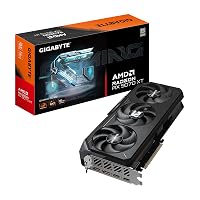 Lowest price
GIGABYTE Radeon RX 9070 XT Gaming OC 16G Graphics Card, PCIe…
4.6
See price
Lowest price
GIGABYTE Radeon RX 9070 XT Gaming OC 16G Graphics Card, PCIe…
4.6
See price
-
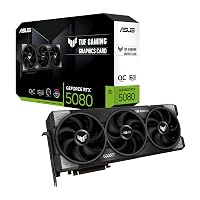 Highest rated
ASUS TUF Gaming GeForce RTX™ 5080 16GB GDDR7 OC Edition Graphics…
4.7
See price
Highest rated
ASUS TUF Gaming GeForce RTX™ 5080 16GB GDDR7 OC Edition Graphics…
4.7
See price
-
 ASUS SFF-Ready Prime NVIDIA GeForce RTX™ 5070 OC Edition Graphics Card…
4.7
See price
ASUS SFF-Ready Prime NVIDIA GeForce RTX™ 5070 OC Edition Graphics Card…
4.7
See price
-
 Reviewed here
PNY NVIDIA RTX PRO 6000 Blackwell MAX-Q Workstation Edition Dual Fan…
5.0
See price
Reviewed here
PNY NVIDIA RTX PRO 6000 Blackwell MAX-Q Workstation Edition Dual Fan…
5.0
See price
As Amazon Associates, we earn from qualifying purchases. This means we may receive a small commission at no extra cost to you if you click through and make a purchase.
High-demand computing environments in shared home workspaces, boutique creative studios, and family-operated technical consultancies face a recurring challenge: consumer graphics hardware often becomes obsolete or physically degraded after only a few years of continuous operational strain. When handling large-scale 3D asset generation, extensive video timelines, and local artificial intelligence models, hardware that lacks sufficient memory or thermal tolerance can fail prematurely under non-stop computational loads. The PNY NVIDIA RTX Pro 6000 is engineered to address these operational bottlenecks directly, pairing extreme frame-buffer headroom with industrial-grade stability designed to provide enduring workstation utility across an extended multi-year ownership lifecycle.
For users who view their computing infrastructure as a long-term investment rather than an annual upgrade cycle, this card prioritizes structural endurance, stable driver support, and massive data capacity over fast consumer turnover. If your daily technical responsibilities require uninterrupted rendering pipelines, rock-solid data integrity, and the thermal composure needed to run intensive workloads for hours without supervision, this card delivers an uncompromising foundation. It stands as an authoritative enterprise tool built to outlast conventional hardware transitions, offering dependable peace of mind for mission-critical personal and family business deployments.


Quick Verdict

This workstation accelerator is built for professionals and technically demanding households seeking uninterrupted stability, massive computational headroom, and exceptional physical longevity.
- Unprecedented 96GB of GDDR7 memory prevents workflow bottlenecks and delays hardware obsolescence.
- Industrial dual-fan active cooling system designed for continuous, sustained thermal dissipation under heavy compute loads.
- Blackwell MAX-Q workstation design focused on efficiency and prolonged component health.
- Heft and structural design weighing 3.34 pounds reflect dedicated enterprise-tier construction.
PNY NVIDIA RTX Pro 6000 Features Explained
Next-Generation GDDR7 High-Capacity Memory
At the center of this hardware platform is the implementation of an expansive 96GB GDDR7 frame buffer. For complex multi-user workflows, 3D parametric modeling, and local data science experiments, standard graphics cards frequently encounter severe system slowdowns when memory limits are exceeded. The nvidia blackwell 6000 96gb gddr7 architecture ensures that massive digital environments, volumetric architectural models, and dense machine learning weights remain entirely resident in high-speed local memory rather than paging out to slower system memory. This architectural advantage prevents memory-induced application crashes, ensuring your daily work proceeds without interruption.
From the viewpoint of hardware longevity, having access to such a substantial memory capacity fundamentally changes the replacement timeline of a workstation. Rather than requiring premature hardware replacements as digital asset sizes expand year over year, the memory buffer accommodates future computational growth with ease. While exploring earlier enterprise models like the nvidia rtx 6000 reveals strong professional support, the introduction of next-generation GDDR7 memory elevates real-world throughput, providing substantial headroom that protects your financial investment against rapid obsolescence over years of operational service.
Dual-Fan Thermal Architecture and Workstation Acoustic Management
Managing heat generation is the most critical element in preserving microelectronic components over extended timeframes. The nvidia blackwell 6000 cooling design relies on a targeted dual-fan layout constructed to maintain steady air movement across the internal heatsink array. By using two balanced fans rather than an aggressive, compact blower assembly, the nvidia blackwell 6000 dual fan mechanism prioritizes consistent airflow and predictable thermal behavior, allowing the hardware to shed heat efficiently without exposing internal solder joints and silicone to severe thermal expansion cycles.
In a home office or combined domestic workspace, acoustic disturbance directly affects daily comfort and overall productivity. The dual-fan assembly regulates operational noise by dispersing thermal loads across a broad surface area, avoiding the high-pitched, abrasive acoustic frequencies typical of high-RPM consumer solutions. This controlled thermal discipline maintains consistent clock frequencies during uninterrupted rendering jobs, preventing thermal throttling and shielding the internal circuitry from heat stress that could otherwise degrade system reliability over thousands of hours of operation.
Blackwell MAX-Q Architectural Efficiency
Built upon the advanced Blackwell architecture, this graphics accelerator incorporates MAX-Q design methodologies calibrated for sustained workstation performance. Rather than pushing electrical limits to extract marginal frequency boosts at the expense of excessive heat generation and energy waste, the pny rtx pro 6000 blackwell design emphasizes optimized power delivery, balanced operational states, and thermal conservation. This refined approach to power management directly contributes to overall nvidia blackwell 6000 durability, keeping internal temperatures within stable thresholds that protect delicate silicon structures over years of heavy use.
This focus on sustained operational discipline translates into exceptionally reliable blackwell rtx 6000 performance during extended multi-hour simulations, CAD exports, and rendering jobs. For family households that run intensive rendering or artificial intelligence pipelines overnight, predictable energy consumption and lower operational heat reduce wear on auxiliary system components, including the host machine power supply and motherboard circuitry, fostering an inherently durable computing environment.
Industrial Manufacturing Standards by PNY
The card reflects rigorous manufacturing principles, arriving with an item weight of 3.34 pounds and substantial physical dimensions measuring 3.1 x 14.2 x 0.1 inches. PNY has a long-standing history of producing enterprise-grade computational components, and that background is evident in the reinforced assembly, rigid structural backplate, and durable component layout. These physical reinforcements safeguard internal printed circuit traces against mechanical sagging and warping when installed in horizontal chassis configurations.
Workstations running intensive pipelines benefit significantly from hardware that is structurally unyielding. The robust housing shields sensitive components from accidental impact during maintenance or component upgrades, while also stabilizing the thermal interface between the cooling array and the underlying processor. For long-term installations where a system may sit in a dedicated server closet or home workstation enclosure for half a decade, this degree of build quality ensures the card remains physically sound and fully operational.
Specs
| Attribute | Detail |
|---|---|
| Manufacturer | PNY |
| Model Number | VCNRTXPRO6000BQ-PB |
| Architecture | Blackwell MAX-Q Workstation Edition |
| Memory Capacity | 96GB |
| Memory Type | GDDR7 |
| Cooling System | Dual Fan Active Cooling |
| Product Dimensions | 3.1 x 14.2 x 0.1 inches |
| Item Weight | 3.34 pounds |
| Interface Support | The listing does not specify |
| Display Output Connectors | The listing does not specify |
PNY NVIDIA RTX Pro 6000 Pros and Cons
What we like
- Massive 96GB GDDR7 frame buffer
- Dual-fan active thermal management system
- Efficient Blackwell MAX-Q workstation architecture
- Robust physical build weighing 3.34 pounds
- Manufactured by enterprise specialist PNY
What we’d change
- Long 14.2-inch chassis clearance requirement
- Display output configurations not specified in listing
- Power consumption and connector details not specified
Check PNY NVIDIA RTX Pro 6000 on Amazon
Best Use Cases
- Local artificial intelligence development and deep learning model training that require immense unfragmented memory allocation.
- High-end architectural visualization and multi-layered cinematic 3D rendering that run uninterrupted across several continuous days.
- Complex engineering simulations, finite element calculations, and CAD workflows demanding stable enterprise workstation drivers.
- Shared multi-user family studio environments where continuous operational uptime and low maintenance are absolute necessities.
Before You Buy
Before purchasing this accelerator, system compatibility must be evaluated thoroughly. Measuring 14.2 inches in length, this card represents a very large physical component that requires a spacious full-tower workstation chassis with sufficient clearance past front-mounted drive bays, radiators, and cable management channels. The listing does not specify the total board power, required power connector pinouts, or recommended system power supply wattage, meaning prospective owners must evaluate their host power supply headroom and verify auxiliary power connectivity prior to deployment. Those comparing modern high-end builds can read our rtx pro 6000 analysis to see how enterprise equipment demands differ from standard consumer setups.
Potential buyers must also take note of details left unspecified in the public hardware listing. The listing does not specify the exact display output configuration, HDMI or DisplayPort versions, included packaging accessories, driver media, or supplemental support brackets. Given the card’s 3.34-pound mass, procuring an aftermarket graphics card support bracket or choosing a motherboard with reinforced PCIe retention slots is strongly advisable to eliminate long-term mechanical stress on the host expansion slot. Ensuring adequate chassis airflow with balanced intake fans will maximize the efficacy of the card’s integrated dual-fan cooling setup.
How It Compares With Similar Picks
| Product | Best For | Key Difference |
|---|---|---|
| PNY NVIDIA RTX Pro 6000 | Large-scale workstation workflows, extensive local AI datasets, and long-term enterprise durability | Massive 96GB GDDR7 frame buffer, Blackwell MAX-Q workstation tuning, dual-fan cooling design |
| ASUS SFF-Ready Prime NVIDIA GeForce | Compact desktop cases, everyday creative work, and high-efficiency home office builds | 12GB GDDR7 memory, space-saving 2.5-slot profile, Axial-tech fans, 3-year warranty |
| GIGABYTE Radeon RX 9070 XT | High-bandwidth general computational tasks, media authoring, and mixed desktop gaming | 16GB GDDR6 memory, PCIe 5.0 connection, triple-fan Gaming OC thermal solution |
| PCIe 5.0 | Heavy-duty desktop workloads requiring reinforced physical construction and protective coatings | 16GB GDDR7 memory, substantial 3.6-slot thermal footprint, protective PCB coating |
When determining which hardware investment aligns best with your workspace requirements, evaluating workflow scale is essential. If your day-to-day requirements center around everyday digital media creation, gaming, or compact system designs, alternatives such as the ASUS SFF-Ready Prime NVIDIA GeForce, the GIGABYTE Radeon RX 9070 XT, or the heavy-duty PCIe 5.0 card offer targeted form factors and accessible consumer interfaces. However, when complex data pipelines or massive neural networks exceed ordinary memory envelopes, none of those alternatives can match the vast 96GB GDDR7 capacity delivered by the PNY workstation card.

Bottom Line
Assessing whether the hardware represents a sensible investment comes down to how your household or creative business values long-term stability versus temporary consumer upgrades. In any thorough nvidia rtx pro 6000 workstation review, the discussion inevitably focuses on reliability and lifecycle duration. Choosing this card means investing in a platform engineered to execute non-stop compute jobs without system lockups, thermal throttling, or premature obsolescence caused by memory exhaustion. The nvidia blackwell 6000 for workstations approach provides a dependable environment that allows technical professionals and multi-generational creators to work with complete confidence.
While compact or entry-level desktop solutions like the nvidia rtx 5060 ti 16gb serve straightforward creative duties admirably, they inevitably fall behind when computational scope widens into enterprise-scale projects. For those whose livelihood depends on continuous system uptime, durable hardware manufacturing, and the capacity to handle tomorrow’s digital workloads without replacing parts every two years, this professional accelerator proves its enduring value. It is a focused, durable powerhouse built to deliver exceptional operational longevity across years of rigorous daily use.
FAQ
Is the NVIDIA Blackwell 6000 worth it for a long-term home workstation?
When evaluating whether is nvidia blackwell 6000 worth it, the answer depends entirely on your memory and longevity requirements. For households or home studios handling expansive artificial intelligence training, scientific simulation, or massive 3D scenes, the 96GB GDDR7 frame buffer eliminates the constant need for hardware upgrades over a multi-year timeframe. If your work routinely saturates standard consumer cards, the enduring stability, driver refinement, and vast capacity justify the investment.
What are the critical PNY NVIDIA Blackwell 6000 specs to consider for installation?
The primary nvidia blackwell 6000 specs detailed in the listing include an item weight of 3.34 pounds, product dimensions of 3.1 x 14.2 x 0.1 inches, a dual-fan cooling system, and 96GB of GDDR7 memory built on the Blackwell MAX-Q architecture under model number VCNRTXPRO6000BQ-PB. Because the listing does not specify exact power consumption or display ports, verifying case clearance and power supply headroom beforehand is critical.
How does the dual-fan cooling design benefit long-term durability?
The integrated dual-fan assembly ensures consistent, linear airflow across the internal cooling fins. By maintaining manageable operating temperatures during extended computational loads, the cooling system reduces thermal stress on internal solder joints and silicone components, directly enhancing physical longevity and preventing thermal throttling during multi-day rendering tasks.
Does this workstation card fit in standard compact computer cases?
No, this graphics accelerator is exceptionally long, measuring 14.2 inches in length. Standard mid-tower or small-form-factor desktop enclosures will likely lack the necessary physical clearance. Installing this hardware requires a spacious full-tower workstation chassis or dedicated server chassis capable of accommodating extended expansion cards without obstruction.
What accessories and video cables are included in the retail box?
The listing does not specify what cables, adapters, mounting brackets, or documentation are included inside the retail packaging. Buyers should be prepared to source their own display cables and consider adding an aftermarket support bracket to support the card’s 3.34-pound weight inside a standard desktop layout.


