
What we looked at
-
 Reviewed here
National Geographic Motorized Rocket Launcher for Kids Ages 8-12
8.2/10
See price
-
 Highest rated
Mafbeanl Rocket Launcher for Kids, Self Launching Motorized Air Rocket Toy
9.2/10
See price
-
 Lowest price
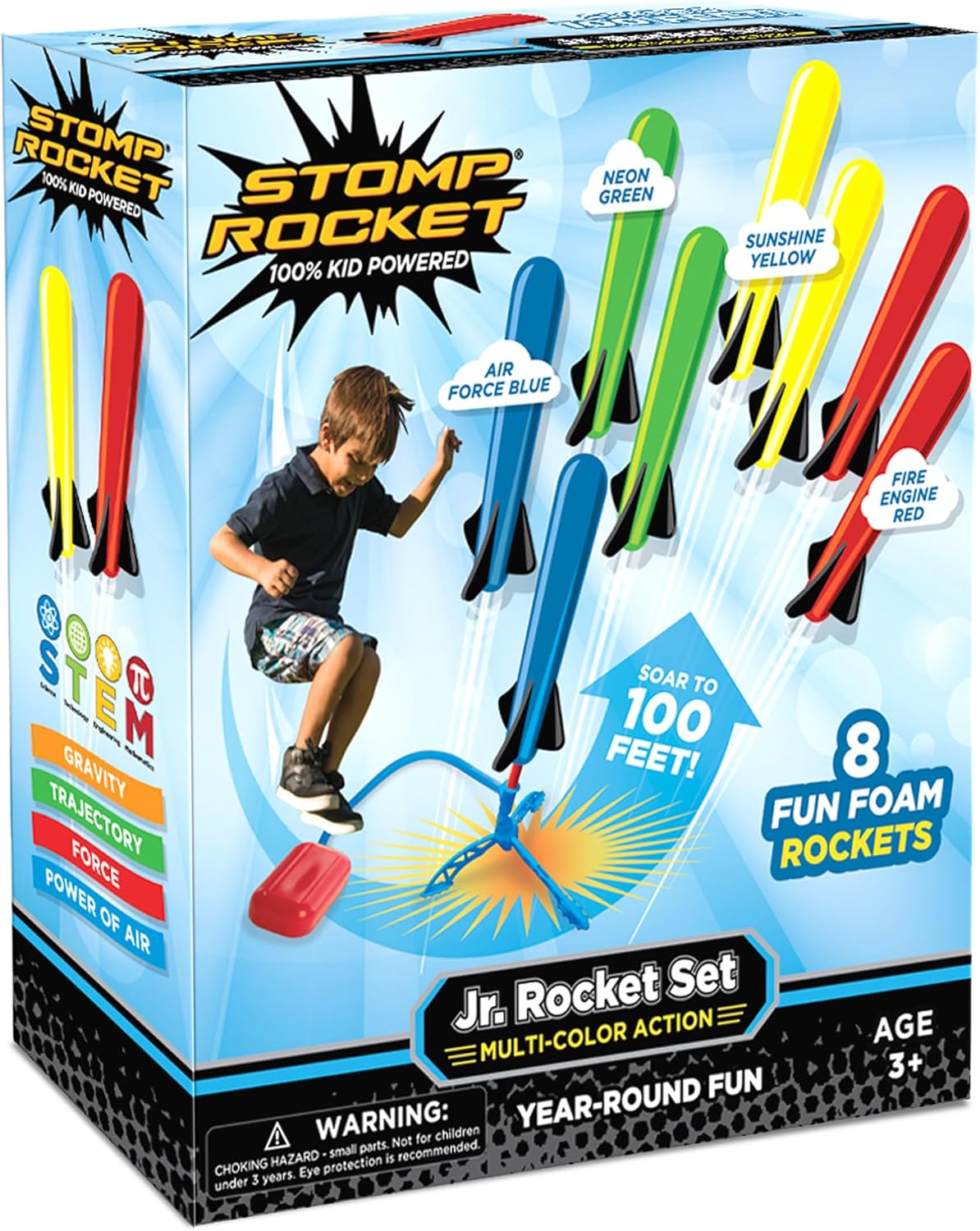
Stomp Rocket Jr Multi-Color Rocket Launcher for Kids, 8 Rockets
9.2/10
See price
-
 TOY Life Space Toy Rocket Toys for Kid Shuttle with Astronaut…
9.2/10
See price
As Amazon Associates, we earn from qualifying purchases. This means we may receive a small commission at no extra cost to you if you click through and make a purchase.
Finding an outdoor science toy that balances excitement with long-term reliability is a common challenge for parents. Traditional model rocketry typically depends on consumable single-use chemical engines, specialized igniters, and extensive open fields, creating an ongoing expense and requiring constant adult oversight. Conversely, basic pneumatic stomp pads, while accessible, can quickly lose their novelty once kids master the manual jump. The National Geographic Power Rocket resolves this dilemma by integrating a motorized propulsion unit powered by an internal rechargeable cell. Designed specifically as a motorized outdoor toy for children ages 8 and up, this electric rocket by national geographic delivers repeated high-altitude flights right from a self-contained launch stand without requiring recurring chemical motor purchases.
Our assessment indicates that this automated rocket represents a compelling upgrade for families seeking durable, repeatable aerial science play. Achieving heights of up to 200 feet across three selectable flight modes, the system features a self-deploying helicopter rotor assembly that controls descent and protects the airframe from hard surface impact. While operating at maximum elevation demands a wide clearing free of tree cover and consideration of light wind drift, the rechargeable electric toy rocket format substantially cuts recurring costs and provides dependable STEM engagement for backyard launch sessions.



Quick Verdict

The National Geographic Power Rocket is an innovative, user-friendly aerial toy that successfully replaces messy single-use rocket engines with a self-contained motorized drive. It provides reliable backyard launches with predictable flight profiles, minimal setup downtime, and a reliable descent system that safeguards the hardware across dozens of flights.
- Rechargeable lithium-ion system capable of executing up to 20 flights on a single charge.
- Three distinct push-button altitude modes scaling up to a motorized rocket launcher 200 feet ceiling.
- Integrated patent-pending rotor blades that automatically deploy at apogee for a controlled helicopter-style descent.
- All-in-one package featuring the launch pad, USB charging cable, custom decals, and an educational guide.
National Geographic Power Rocket Features Explained
Motorized Flight and Altitude Control
At the heart of the National Geographic Power Rocket is an automated electric motor that drives the vehicle into the sky without gunpowder, compressed air tubes, or chemical fuels. Parents and children can select between three pre-programmed flight profiles using a straightforward push-button interface located directly on the body. Each mode adjusts the duration of the motor burn: shorter durations yield lower, controlled hops suited for smaller clearings, while the longest setting engages maximum motor output to propel the craft up to 200 feet into the air.
This tiered control structure allows young operators to systematically test altitude variations and study basic physics principles, such as energy duration and gravitational resistance. Because the flight profile is managed electronically, launches remain consistent and eliminate the misfires often experienced with manual launch cords or chemical igniters. This predictable performance positions the unit as a premier candidate for families seeking the best electric rocket for backyard flight demonstrations.
Rotor Blade Recovery System
A frequent failure point in hobby rocketry is the recovery phase, where traditional parachutes easily tear, tangle their suspension lines, or drift miles off course. This model sidesteps those vulnerabilities by employing an innovative safe landing motorized rocket mechanism based on helicopter-style rotor blades. When the rocket expends its motor run and reaches the peak of its trajectory, the internal mechanism releases fold-out rotor blades that spin automatically against the rushing air.
This autorotation significantly slows the descent rate, allowing the rocket to gently twirl back toward the ground rather than plummeting at free-fall speeds. The controlled descent cushions the impact when landing on grass, dirt, or packed turf, which actively preserves the motor housing and structural airframe over extended launch afternoons. For families who have previously built space models like the lego blue astronaut or miniature static shuttles, seeing a mechanical rotor deploy automatically at 200 feet adds a genuine engineering thrill to active outdoor play.
Rechargeable Battery Performance
Operational costs can quickly mount with battery-hungry outdoor toys, making the power system a critical buying consideration. This model integrates a dedicated lithium-ion rechargeable battery, eliminating the necessity of storing disposable alkaline batteries or ordering specialized combustion packs. The included charging cable links directly to standard USB power ports, allowing families to top off the craft between outings or via portable power banks at a neighborhood park.

Regarding national geographic electric rocket battery life, the listing specifies that a fully powered cell delivers up to 20 complete launches before requiring a recharge. This launch volume gives a group of children plenty of turn-taking opportunities during a single afternoon session. Because the battery is housed internally and shielded within the fuselage, it remains protected from launch pad moisture and rough ground contact.
Launch Pad and Customization Accessories
Proper launch stability is essential for vertical flight paths, and the National Geographic Power Rocket comes packaged with its own dedicated launch pad base. The launch base provides a level, secure footing that stabilizes the rocket prior to motor ignition, ensuring that thrust is directed straight up rather than angling dangerously toward spectators. Its compact footprint makes the entire launch rig portable enough to fit into a backpack alongside family outdoor gear.
To encourage personalization, the manufacturer includes three decorative sticker sheets that allow kids to customize the fuselage with distinctive markings. Beyond cosmetic accessories, the package includes an illustrated educational guide that explores the mechanics of atmospheric flight, propulsion, and rocketry history. Much like building themed sci-fi displays with the buzz lightyear rocket, applying these decals gives children a sense of project ownership before they ever initiate countdown on the launch pad.
Specs
| Attribute | Detail |
|---|---|
| Model Number | NGMORKT |
| Manufacturer | JMW Sales, Inc. (Brand: Blue Marble) |
| Recommended Age | 8 years and up |
| Maximum Altitude | Up to 200 feet |
| Flight Modes | 3 selectable altitude settings |
| Launch Capacity | Up to 20 flights on a single charge |
| Power Source | Rechargeable Lithium-Ion battery |
| Landing Mechanism | Deployable helicopter-like rotor blades |
| Educational Objective | STEM (Science, Technology, Engineering, Math) |
| Included In Box | Power Rocket, launch pad, charging cable, 3 decal sheets, instructions and learning guide |
National Geographic Power Rocket Pros and Cons
What we like
- Rechargeable motor provides up to 20 launches per charge
- Reaches flight altitudes up to 200 feet
- Three push-button flight settings control altitude
- Helicopter rotor blades provide controlled soft landings
- Includes launch pad charging cable and learning guide
What we’d change
- Requires wide open outdoor space to avoid tree loss
- Listing does not specify full battery recharge duration
- Rotor descent is susceptible to wind drift
Check National Geographic Power Rocket on Amazon
Best Use Cases
- Backyard STEM demonstrations where children can systematically test how motor burn duration alters overall altitude.
- Park launch outings where families want a self-contained flying toy that does not require buying single-use motors.
- Hands-on physics activities for science clubs exploring mechanical autorotation and aerodynamic drag concepts.
- Birthday gatherings for children ages 8 and older seeking high-action outdoor play with rapid turnaround between flights.
Before You Buy
Before ordering the National Geographic Power Rocket, buyers must evaluate their available flight space. Even though the lowest motor setting keeps flights relatively contained, the highest setting reaches up to 200 feet, which exposes the lightweight airframe to upper-level crosswinds. While the rotor descent system prevents aggressive nose-dives, light breezes will carry the descending craft horizontally. To ensure you do not lose the craft on a neighborhood roof or in high tree branches, operations should be reserved for wide backyards, sports fields, or open parkland. The product listing does not specify exact recharge duration times in minutes or the milliamp-hour capacity of the battery, so planning a brief charging window before heading out is recommended.
Shoppers should also note that this specific motorized rocket is manufactured by Blue Marble as an Amazon exclusive item under model number NGMORKT. The listing confirms that the set includes one complete rocket, the launch pad, a charging cable, three decal sheets, and the instructional booklet. It does not include alternate nose cones, secondary replacement hulls, or a separate wall charging adapter. While the manufacturer warranty notes that products are backed by service from their U.S. support team, the product specifications do not state an explicit warranty timeframe in months or years.
How It Compares With Similar Picks
| Product | Best For | Key Difference |
|---|---|---|
| National Geographic Power Rocket | Automated Multi-Height Backyard Launches | 3 push-button altitude modes up to 200 ft with deployable rotor blades and rechargeable battery |
| Outdoor Toys for Ages 8-12 | Parachute-Based High Altitude Flights | Reaches up to 200 ft using a traditional cloth parachute deployment rather than helicopter blades |
| Fun Outdoor Toys for Boys | Younger Kids Seeking Active Stomp Play | Completely non-electric foam blaster set soaring up to 100 ft using 8 soft rockets and foot power |
| TOY Life Space Toy Rocket | Imaginative Indoor Pretend Play | Multi-piece shuttle and space station playset designed for ages 3 and up without outdoor flight capability |
Choosing between these outdoor options depends heavily on the age of your children and how much physical intervention you prefer during play. If you have younger kids under age 8 who want immediate, active running games, a foot-powered launcher like the stomp foam set avoids electronic charging entirely and uses forgiving foam rockets. If your focus is dramatic indoor roleplay rather than outdoor flight, an interactive playset like the TOY Life shuttle offers stationary figures and imaginative exploration, much like building character displays around rocket and baby groot lego kits. However, for older kids who want genuine aerodynamic propulsion and self-contained mechanical action up to 200 feet, the motorized rotor-landing engineering of this Blue Marble set remains the most technically engaging choice.
Bottom Line
When asking if the national geographic motorized rocket is worth it, the answer depends on your appetite for repeatable outdoor action without recurring supply runs. By packing a lithium-ion rechargeable battery and a motorized propeller into a streamlined airframe, Blue Marble has engineered an accessible piece of rocketry equipment that sidesteps the ongoing cost of single-use chemical engines. The inclusion of three distinct altitude settings allows children to safely scale their launch heights according to field dimensions, while the rotor recovery system solves the common frustration of shredded parachutes and crushed fuselages.
While parents must ensure flights take place in open spaces away from dense tree lines to account for wind drift, the overall convenience and durability make it an exceptional investment for family flight days. With its balanced educational guide, sturdy launch pad, and up to 20 launches per charge, the national geographic rocket launcher for kids stands as a durable, highly replayable centerpiece for backyard STEM exploration.
FAQ
How high does the electric rocket by national geographic fly?
The rocket features three push-button flight settings that alter the duration of motor burn, allowing the craft to achieve different altitudes. On its highest setting, the motorized system is capable of propelling the rocket up to 200 feet into the air before deploying its recovery blades.
How long does the national geographic electric rocket battery life last during play?
According to the manufacturer specifications, the built-in lithium-ion battery provides up to 20 full flight launches on a single charge. Recharging is handled via the included USB charging cable, though the listing does not specify the exact number of minutes required for a complete recharge.
What makes the safe landing motorized rocket rotor system work?
Instead of using a traditional fabric parachute that can snag or rip, the rocket incorporates patent-pending helicopter-like rotor blades. When the rocket reaches peak altitude and motor thrust ceases, the blades extend outward automatically, creating aerodynamic drag that softly spirals the rocket back to the ground.
Is the national geographic motorized rocket worth it for small yards?
The rocket can be launched in smaller spaces using its lower height settings, which restrict flight duration. However, because the rotor recovery system relies on a gentle floating descent, light wind can cause the rocket to drift horizontally. A wide backyard, open sports field, or park is recommended, especially when utilizing the maximum 200-foot mode.
What is included in the national geographic power rocket specs package?
The package contains the Power Rocket with its integrated rechargeable lithium-ion battery, a dedicated rocket launch pad, a USB charging cable, three sticker sheets for custom styling, and an illustrated instruction and STEM learning guide.


