As Amazon Associates, we earn from qualifying purchases. This means we may receive a small commission at no extra cost to you if you click through and make a purchase.
As an Amazon Associate we earn from qualifying purchases. Links on this page are affiliate links.
You are comparing eco worthy eco worthy 10000w output vs 10kw output 9 36kwh off. Both systems deliver 10,000W continuous power for home off-grid use with 120V/240V split-phase output. They share 48V lithium battery architecture and Wi-Fi monitoring. The main difference lies in solar generation and storage. The first kit uses five 590W panels and a single large battery for higher total capacity. The second uses twelve 195W panels and two smaller batteries for a different energy profile.
Solar Panel Configuration
5 × 590W panels (2950W total)
12 × 195W panels (2340W total)
Battery Capacity
1 × 48V 314Ah battery (16.1 kWh)
2 × 48V 100Ah batteries (9.36 kWh)
Panel Technology
Mono-crystalline with heat-strengthened glass
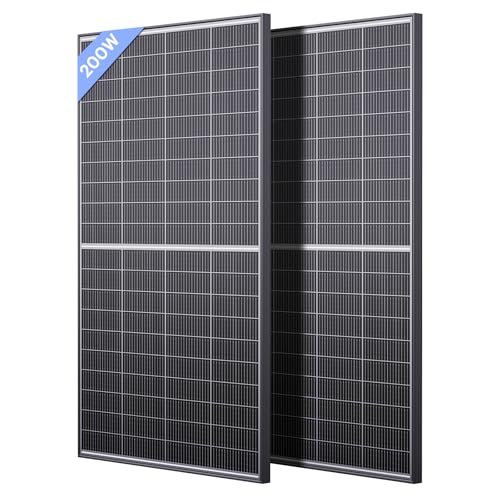
N-Type 18BB bifacial with 25% efficiency
Certifications
Not listed
UL 1741, UL 1973, UL 9540A, CEC
Choose the first if
- You need maximum daily energy storage for heavy loads
- You prefer fewer, larger panels for easier roof mounting
- You want a battery with a built-in color display and wheels
Choose the second if
- You need multiple North American safety certifications
- You want bifacial panels for potential extra energy gain
- You prefer a system with more granular battery monitoring via app
Verdict
Choose the first kit if your priority is raw storage capacity and simpler hardware with fewer components. Choose the second kit if you require specific safety certifications and advanced bifacial panel technology. Both provide the same 10kW output for your essential home appliances.
Solar Kit and Battery Specs Compared
Solar Panel Capacity
Edge: ECO-WORTHY 10kW Off-Grid Solar System
The ECO-WORTHY 10kW Off-Grid Solar System uses five 590W mono-crystalline panels for a total rated wattage of 2950W. This configuration provides higher daily generation potential under optimal conditions, with claims of up to 11.8 kWh per day. In contrast, the ECO-WORTHY 10kW Off-Grid Solar Kit includes twelve 195W N-Type bifacial panels, totaling 2340W. While the panel count is higher, the aggregate power rating is lower. The first system offers more raw solar input capacity, which can translate to greater energy independence on cloudy days or during winter months when sunlight is limited. You should consider your local climate and roof space when weighing these totals.
Battery Storage Capacity
Edge: ECO-WORTHY 10kW Off-Grid Solar System
Energy storage is a critical differentiator between these two kits. The ECO-WORTHY 10kW Off-Grid Solar System comes with a single 48V 314Ah LiFePO4 battery, providing 16.1 kWh of usable energy. This large capacity allows you to run high-draw appliances for extended periods without recharging. The ECO-WORTHY 10kW Off-Grid Solar Kit includes two 48V 100Ah batteries, offering a combined capacity of 9.36 kWh. While sufficient for basic backup needs, this storage is significantly smaller than the first option. If you plan to power a refrigerator, sump pump, or medical devices overnight, the larger battery in the first system provides a much longer runtime before depletion.
Panel Technology and Efficiency
Edge: ECO-WORTHY 10kW Off-Grid Solar Kit
The ECO-WORTHY 10kW Off-Grid Solar Kit features N-Type 18BB solar cells with a stated conversion efficiency of 25%. These panels are bifacial, meaning they can capture sunlight from both sides, potentially adding up to 100Wh of extra energy daily depending on ground reflection. They also carry an IP68 waterproof rating. The ECO-WORTHY 10kW Off-Grid Solar System uses standard mono-crystalline panels with heat-strengthened glass and improved shading tolerance, but specific efficiency percentages are not listed. If panel efficiency and bifacial gain are priorities for your installation, the second kit offers advanced cell technology that may perform better in low-light or reflective environments.
Inverter Monitoring Features
Edge: ECO-WORTHY 10kW Off-Grid Solar System
Both systems include Wi-Fi monitoring for remote management, but the ECO-WORTHY 10kW Off-Grid Solar System adds a 7-inch full-color display directly on the battery unit. This physical interface allows you to check system status without needing a smartphone or tablet. The ECO-WORTHY 10kW Off-Grid Solar Kit relies on a mobile app for battery monitoring via Bluetooth and Wi-Fi. While the app offers convenience, the lack of a built-in screen means you must rely entirely on your device. For users who prefer immediate, local visual feedback on power levels and system health, the integrated display in the first system is a practical advantage.
Certifications and Safety Standards
Edge: ECO-WORTHY 10kW Off-Grid Solar Kit
The ECO-WORTHY 10kW Off-Grid Solar Kit explicitly lists UL 1741 certification for the inverter and UL 1973 and UL 9540A certifications for the battery. It also mentions compliance with California Energy Commission (CEC) standards and Intertek testing. These certifications verify safety against thermal runaway and grid interconnection requirements. The ECO-WORTHY 10kW Off-Grid Solar System mentions a PACE 200A Battery Management System and dual breakers for circuit safety, but specific third-party safety certifications are not detailed in the provided data. If strict adherence to recognized North American safety standards is a primary concern for your insurance or local code, the second kit provides more documented verification.
Which ECO-WORTHY 10kW System Fits You
You need high daily energy and scalability
Our pick: ECO-WORTHY 10kW Off-Grid Solar System
This kit includes a single 48V 314Ah battery for 16.1 kWh of storage, far exceeding the other model's 9.36 kWh. It also features five 590W panels totaling 2950W, compared to twelve 195W panels. The larger battery supports parallel expansion up to 241 kWh, making it better for heavy usage or future growth.
You want certified safety and bifacial panels
Our pick: ECO-WORTHY 10kW Off-Grid Solar Kit
This model uses N-Type 18BB bifacial panels with 25% efficiency and IP68 waterproofing, adding up to 100Wh daily via double-sided generation. It includes two 48V 100Ah batteries and holds UL 1741, UL 1973, and UL 9540A certifications. These safety standards and panel technology offer robust performance for reliable off-grid living.
You prefer a compact and lighter setup
Our pick: ECO-WORTHY 10kW Off-Grid Solar Kit
The PRO 10kWh+2340W system weighs only 21.9 pounds, significantly less than the ULTRA version. Its individual panels are smaller at 58.9 by 26.2 inches, simplifying transport and roof mounting. The included two batteries provide a balanced 9.36 kWh capacity, which suits moderate daily loads without the bulk of the larger single-battery unit.

ECO-WORTHY 10kW Off-Grid Solar System
Best for: Home off-grid power with split-phase output
- Rated Wattage
- 2,950W
- Cell Type
- Mono-crystalline
- System Voltage
- 48V
- Weight
- 72.8 pounds
- Intended Use
- Home, Off-Grid
- Recommended Use
- Off-Grid Systems
This off-grid solar kit delivers 10,000W continuous output with 120V/240V split-phase support for home appliances. It includes five 590W panels totaling 2,950W and a 48V 314Ah LiFePO4 battery providing 16.1kWh of storage. The system features a 10kW inverter with dual MPPT controllers and built-in WiFi monitoring. You get a complete solution designed for reliable home power in off-grid setups.
- 10,000W continuous and 20,000W peak output
- 16.1kWh LiFePO4 battery capacity
- 5x 590W mono-crystalline solar panels
- Dual MPPT controllers for efficient charging
- Built-in WiFi and Bluetooth monitoring
- 2,950W panel capacity is lower than the 10kW system variant
- Requires professional installation for safety
- Shipped on a pallet due to size
- You need 120V/240V split-phase power
- You want a complete off-grid home system
- You prefer LiFePO4 battery chemistry
- You only need small appliance power
- You cannot accommodate pallet delivery
- You lack professional installation support
Verdict: ECO-WORTHY 10kW 16kWh Off-Grid Solar Kit suits homeowners needing substantial off-grid power with split-phase output. It provides ample battery storage and high panel efficiency for serious energy independence.

ECO-WORTHY 10kW Off-Grid Solar Kit
Best for: High-output off-grid home backup
- Rated Wattage
- 195W
- Cell Efficiency
- 25%
- Cell Type
- N-Type 18BB
- IP Rating
- IP68
- Weight
- 21.9 lbs
- Intended Use
- Home, Off-Grid
This ECO-WORTHY system delivers 10,000W continuous output with 9.36kWh of storage. It includes twelve 195W N-Type panels and two 48V batteries. The setup supports parallel operation for higher power needs. You get split-phase 120V/240V output for home appliances. The kit suits off-grid homes or cabins requiring reliable backup power for high-draw devices.
- 10,000W continuous inverter output supports high-power appliances
- 9.36kWh storage capacity from two 48V lithium batteries
- N-Type 18BB panels achieve 25% conversion efficiency
- Parallel support allows up to six units for 60kW total
- UL 1741 and UL 1973 certifications ensure safety standards
- Individual solar panels are rated at only 195W each
- Requires professional installation to maintain safety and performance
- System weight is 21.9 lbs per panel component
- You need split-phase 120V/240V power for home use
- You want to expand capacity by paralleling multiple units
- You require UL-certified off-grid components for safety
- You prefer a single high-wattage panel per unit
- You want a DIY-friendly setup without professional help
- You need a portable solution rather than a fixed kit
Verdict: ECO-WORTHY 10KW Off-Grid Kit fits homeowners needing substantial backup power with expandable capacity. It suits those willing to hire installers for a certified, high-output off-grid solution.
Specifications side by side
| Spec | ECO-WORTHY 10kW Off-Grid Solar System | ECO-WORTHY 10kW Off-Grid Solar Kit |
|---|---|---|
| Rated Wattage | 2,950W | 195W |
| Cell Efficiency | – | 25% |
| Cell Type | Mono-crystalline | N-Type 18BB |
| System Voltage | 48V | – |
| IP Rating | – | IP68 |
| Weight | 72.8 pounds | 21.9 lbs |
| Intended Use | Home, Off-Grid | Home, Off-Grid |
| Voltage | 120V/240V | 120V/240V |
| Wattage | 10000W | 10000W |
| Recommended Use | Off-Grid Systems | Off-Grid Systems |
| Included Components | Inverter | Inverter, Lithium Battery |
| Battery Type | – | Lithium |
| Dimensions | 89.7 × 44.7 × 1.18 inches | 58.9 × 26.2 × 1.18 inches |
| Size | ULTRA 16kWH+2950W | PRO 10kWh+2340W |
| Color | Black | Black |
| Model | L02M590-SRNK10KL314U1-5 | L02M195TM-WZSRNK10KU3U2-12 |
Frequently asked questions
What is the main difference between the two ECO-WORTHY 10kW systems?
The primary difference is energy storage and solar generation capacity. The top pick includes a larger 16.1 kWh battery and five 590W panels for 2950W total input. The second option offers 9.36 kWh of storage with twelve smaller panels totaling 2340W. Both provide 10,000W output for home use.
Which system has more battery storage capacity?
The first model, B0GWJ5MWLQ, provides significantly more storage. It features a single 48V 314Ah battery resulting in 16.1 kWh of usable capacity. The second model, B0FN3KW7PQ, offers 9.36 kWh. If you need extended power during outages, the larger battery in the top-rated kit is the better choice.
How do the solar panel configurations compare?
The systems use different panel counts and wattages. The top-rated kit uses five high-output 590W panels, totaling 2950W. The second kit includes twelve panels for a combined 2340W. The first system generates more power per panel, while the second relies on a higher quantity of lower-wattage units.
Do both systems support split-phase output?
Yes, both units support 120V/240V split-phase output. This allows you to power standard household appliances that require higher voltage. Both systems are designed for home off-grid use and share this core electrical specification for versatility in residential settings.
What is the physical size difference between the kits?
The kits differ in overall dimensions and weight. The top pick measures 89.7 inches in length and 44.7 inches in width. The second model is more compact at 58.9 inches long and 26.2 inches wide. It also lists a weight of 21.9 pounds. Consider your installation space when choosing.
Are both systems suitable for off-grid homes?
Yes, both are intended for home off-grid applications. They provide 10,000W of continuous power suitable for substantial home backup. Both utilize lithium battery technology and include inverters. They are designed to operate independently of the utility grid for serious energy independence.