
What we looked at
-
 Reviewed here
ZWO Seestar S30 Pro Smart Telescope, App-Controlled Astrophotography
8.8/10
See price
-
 Highest rated
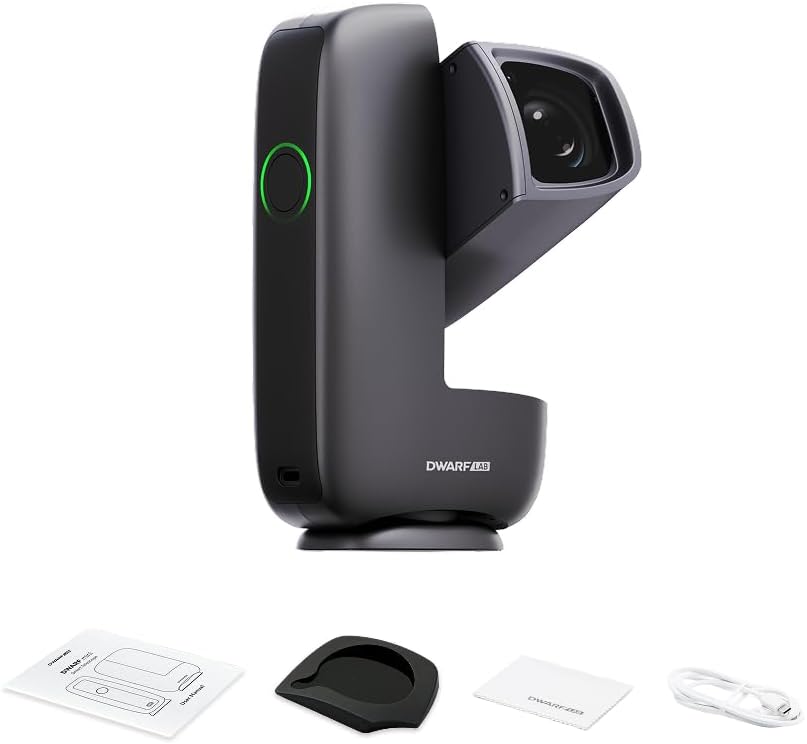
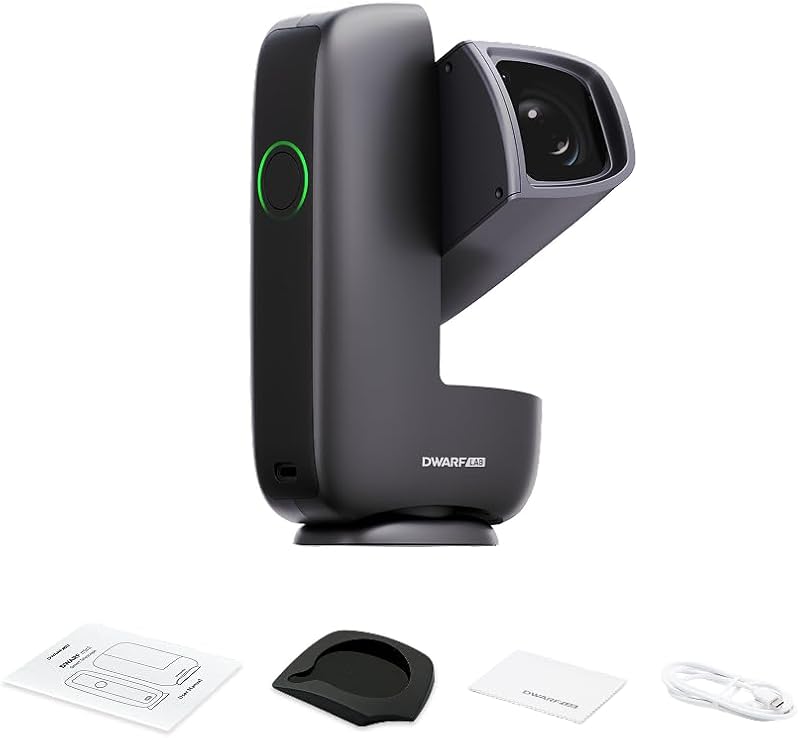
DWARFLAB Dwarf Mini Smart Telescope - 1.85lb Portable Astronomy Telescope
8.8/10
See price
-
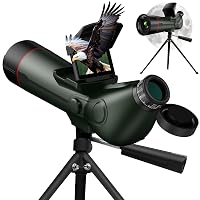 Lowest price
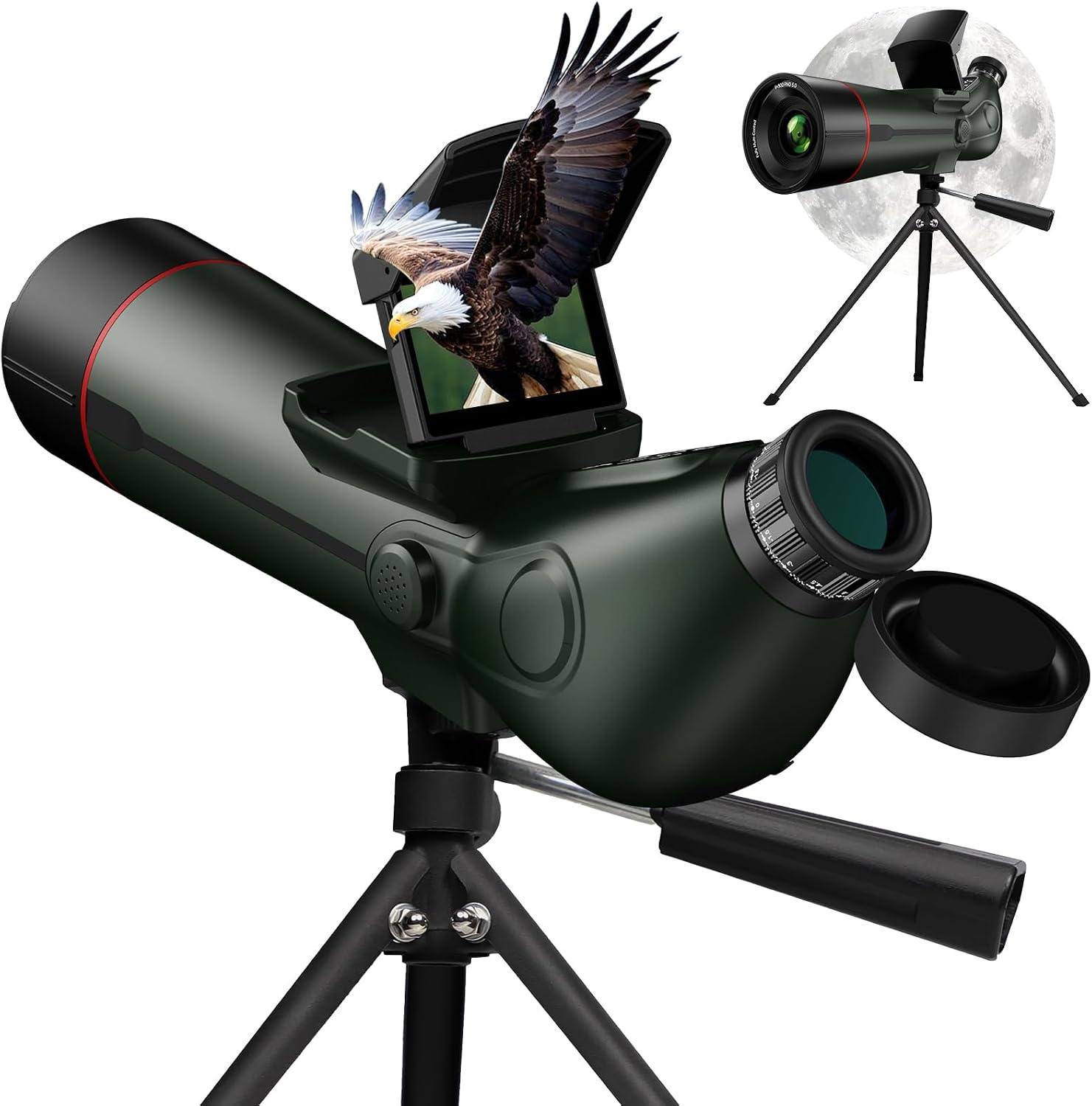
Smart Telescope Portable Digital Electronic Telescopes Refractor Telescope
See price
-
 DWARFLAB Dwarf 3 Smart Telescope, App-Controlled Astrophotography Camera
8.6/10
See price
As Amazon Associates, we earn from qualifying purchases. This means we may receive a small commission at no extra cost to you if you click through and make a purchase.
Stargazing with children often begins with high hopes and quickly collapses under the weight of cumbersome gear, confusing manual equatorial mounts, and chilly evenings spent hunting in vain for a faint smudge in a tiny eyepiece. Traditional telescopes demand patience, technical alignment skills, and forgiving weather, which rarely align with the bedtime schedules and attention spans of young family members. The ZWO Seestar S30 Pro smart telescope enters the scene to resolve this exact frustration, transforming deep-space discovery into an accessible, interactive digital experience that parents and kids can enjoy together from a backyard patio or living room couch.
In this detailed zwo seestar s30 review, we examine whether this compact, automated observing rig delivers genuine educational value and lasting durability for active households. By blending automated star alignment, light-pollution suppression, and dual-optic imaging, the ZWO Seestar S30 Pro removes the barriers that traditionally turn beginner astronomers away. Our assessment reveals that while serious astrophotographers chasing raw optical aperture might notice physical limits, families seeking a reliable, grab-and-go window into the cosmos will find it remarkably capable, user-friendly, and resilient for years of shared discovery.


Quick Verdict

The ZWO Seestar S30 Pro is an outstanding all-in-one smart observation hub designed specifically to make celestial viewing and night photography effortless for beginners and busy families.
- Zero-frustration automated sky calibration and object tracking via smartphone or tablet
- Dual-camera imaging module producing clear 4K-quality captures of nebulae, star clusters, and lunar craters
- Extremely portable 3.6-pound form factor that packs quickly for weekend camping trips and outdoor exploration
- Integrated light pollution filtration and AI-assisted processing that make city and suburban stargazing genuinely rewarding
ZWO Seestar S30 Pro Features Explained
Dual-Camera 4K Imaging and Optical System
At the mechanical heart of this smart observation hub is a tailored optical assembly designed around a 30-millimeter objective lens with a 160mm focal length. While traditional telescopes prioritize wide glass diameters to funnel raw light onto a physical eyepiece, the zwo seestar s30 dual camera system approaches the night sky digitally. It pairs high-grade apochromatic glass with fully multi-coated optics to significantly suppress chromatic aberration, ensuring stars remain tight, round, and free from distracting color halos. The dual-camera arrangement lets the telescope switch seamlessly between wide celestial sweeps and focused targets.
Through its 4K imaging pipeline, the device records deep-sky objects and sprawling nightscapes with crisp definition. Instead of squinting through fogged oculars, family members can observe real-time color stacking on an iPad or phone screen. The telescope progressively gathers light over short exposures, revealing vibrant dust lanes in distant galaxies and rich nebular clouds that human eyes simply cannot perceive through standard glass optics of comparable size.
Automated GOTO Tracking and Celestial Alignment
One of the steepest hurdles in amateur astronomy is star hopping—learning how to navigate faint constellations to pinpoint elusive targets. The seestar s30 automatic tracking system solves this problem through automated plate solving and computerized GOTO motorized navigation. Supported by an internal reflex finderscope and driven by an alt-azimuth mount that also accommodates equatorial mode adjustments, the device scans its local sky, determines its physical orientation, and calibrates itself without manual intervention.
Once calibrated, the user simply selects an object from the celestial catalog. The motorized mount pivots quietly to center the target and continuously counters the rotation of the Earth. This level of rock-solid stability is vital because long-session imaging requires the scope to stay perfectly stationary relative to deep-sky coordinates. For parents, this eliminates ten to twenty minutes of fiddling in the dark while children lose interest, turning stargazing into an immediate, engaging journey.
Seestar S30 App Control and Intelligent Software Modes
The telescope completely eliminates physical knobs and optical finders, relying instead on seestar s30 app control through a connected phone or tablet. The interface operates as an interactive digital planetarium, displaying what is currently visible above your horizon alongside educational notes on history, distance, and astrophysical composition. This digital bridge turns an ordinary backyard evening into a guided science lesson where children can choose targets and learn about the universe at their own pace.
Beyond standard observing, the software includes pre-programmed routines such as Plan Mode, one-tap Milky Way imaging, and automated star-trail generation. For panoramic targets that spill beyond the native 4.6-degree field of view, the system utilizes automated mosaic stitching. The telescope systematically scans adjoining quadrants of the sky, captures individual image tiles, and blends them seamlessly into an expansive wide-field composition without requiring external desktop software.
AI-Assisted Image Processing and Urban Filtering
Observing celestial phenomena from suburban backyards often suffers from ambient neighborhood illumination and municipal streetlights. The ZWO Seestar S30 Pro tackles this environmental roadblock by incorporating built-in light pollution filters directly into its internal optical path. These specialized interference coatings block invasive sodium and mercury vapor wavelengths while allowing the critical hydrogen-alpha and oxygen-III emission bands of glowing nebulae to pass cleanly through to the sensor.
Simultaneously, the onboard AI smart imaging engine operates in real time to denoise frames as they accumulate. By mathematically isolating structural astronomical details from random thermal grain, the processor produces smooth, publication-ready images. Furthermore, when taking wide nightscape photos, the AI distinguishes between foreground landscape elements and the moving star field, preventing trees or rooftops from blurring while maintaining sharp stars overhead.
Compact Portability and All-Weather Observation
Bulky equipment that requires multi-box transport rarely leaves the closet after the first few uses. Weighing just 3.64 pounds and measuring a modest 3.1 inches deep, 5.5 inches wide, and 8.3 inches high, this smart optical unit packs easily into a standard daypack. The unit includes built-in anti-dew protection to prevent condensation from blinding the front lens element during damp autumn evenings or dewy summer nights, ensuring that imaging sessions can continue uninterrupted across temperature drops.
The device is equally capable during daylight hours. Families can set up the unit on a picnic table to track distant mountain ridges, survey landscape features, or observe wildlife and birds from a comfortable distance on their connected screens. Much like keeping a portable family camera such as the canon powershot elph 360 ready for quick snapshots, having an ultra-compact smart telescope encourages spontaneous outdoor exploration whenever clear skies appear.
Specs
| Attribute | Detail |
|---|---|
| Brand & Model | ZWO Seestar S30 Pro |
| Objective Lens Diameter | 30 mm |
| Focal Length | 160 mm |
| Field of View | 4.6 degrees |
| Optical Coating | Fully Multi-Coated, Apochromatic Optics |
| Mount Type | Alt-Azimuth Mount (Supports Equatorial Mode) |
| Focus Mechanism | Auto Focus and Manual Focus |
| Finderscope | Reflex |
| Dimensions | 3.1″D x 5.5″W x 8.3″H |
| Unit Weight | 3.64 lbs (3.6 lbs nominal) |
| Power Source | Battery Powered (1 Nonstandard Battery included) |
| Compatible Devices | Smartphone, Tablet |
ZWO Seestar S30 Pro Pros and Cons
What we like
- Dual-camera system with 4K resolution
- Automated GOTO targeting and sky tracking
- Built-in light pollution filters for cities
- Compact 3.6-pound portable design
- Apochromatic fully multi-coated optics
- One-tap Milky Way and mosaic modes
What we’d change
- Modest 30mm objective lens diameter
- Nonstandard battery design
- Must remain stationary during captures
Check ZWO Seestar S30 Pro on Amazon
Best Use Cases
- Backyard astronomy sessions where children can explore the moon, planets, and deep-space objects simultaneously on a shared tablet screen.
- Weekend family camping trips where compact packing space and rapid tripod setup take precedence over bulky glass gear.
- Suburban and city stargazing that relies on integrated light pollution filters to cut through street lighting.
- Daytime nature study and distant birdwatching across parks, lakes, and hiking trails without disturbing local wildlife.
- Introductory astrophotography learning for teens seeking one-tap captures of star trails and wide Milky Way mosaics.
Before You Buy
Before purchasing the ZWO Seestar S30 Pro smart telescope, consider how its digital-first architecture fits your intended observation habits. Because the unit relies entirely on wireless communication with a smartphone or tablet running the proprietary companion app, you must have a supported smart device available during viewing sessions. There is no optical eyepiece to look through; all framing, focusing, calibration, and image viewing happen exclusively on your screen. The motorized mount supports both standard alt-azimuth tracking and equatorial (EQ) tracking modes, but utilizing EQ mode requires proper physical alignment as outlined in the included user manual to maximize tracking precision.
Shoppers should also take note of what the product listing specifies and what remains omitted. The system runs on an included nonstandard rechargeable battery, providing wireless freedom in the field, but the listing does not specify exact runtime hours per charge or the specific watt-hour rating. Additionally, while the telescope features robust anti-dew heating and internal image processing, the listing does not specify internal storage gigabytes or whether a wall charging brick is supplied in the box. Starlight capture requires an uninterrupted view of the sky, and deep-sky imaging demands that the entire setup remain completely stationary on solid ground throughout the exposure sequence.
How It Compares With Similar Picks
| Product | Best For | Key Difference |
|---|---|---|
| ZWO Seestar S30 Pro | Families wanting balanced 4K dual-camera astronomy and daytime viewing | Apochromatic optics, 30mm aperture, 160mm focal length, AI noise reduction |
| App Control | Backpackers needing an ultra-lightweight observing rig | Weighs only 1.85 lbs with 360-degree pivot freedom and 90-second exposure capability |
| Desktop Tripod Portable 4K Astrophotography | Tabletop birdwatching and mixed digital wildlife spotting | Features a larger objective lens refractor design tailored for desktop tripod setups |
| Portable 3lb Design | Users prioritizing 3-pound portable wide-field panoramas | Dedicated 3-pound chassis optimized for 4K auto-tracking, AZ/EQ modes, and panorama shooting |
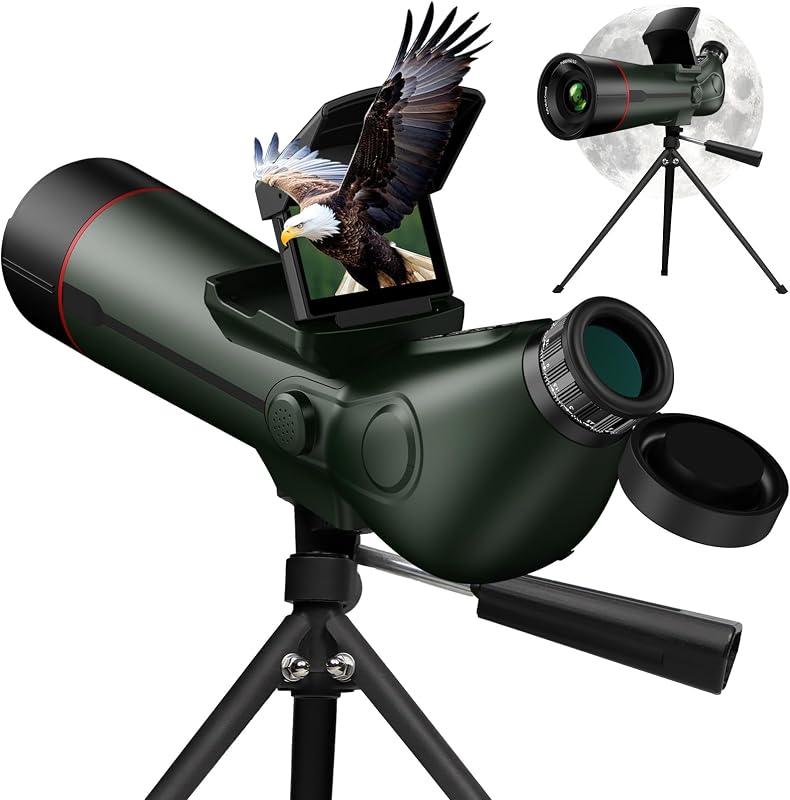
When choosing between these options, prioritize the physical environment and balance of features your family needs most. If shedding every possible ounce for backcountry trekking is your paramount goal, the miniature 1.85-pound App Control alternative provides unmatched weight savings. If your priority leans heavily toward daytime wildlife observation on an outdoor patio, the Desktop Tripod Portable 4K Astrophotography refractor offers a tabletop configuration with a larger objective lens. However, for households seeking a mature software ecosystem, balanced 30mm apochromatic glass, dual-camera versatility, and proven automated tracking, the ZWO Seestar S30 Pro remains the most complete family-oriented package. Those already familiar with larger legacy hardware like the zwo seestar s50 pro will appreciate how this compact S30 iteration trims physical footprint while preserving core smart automation.
Bottom Line
Investing in family astronomy equipment often carries the risk of buying an intimidating scientific instrument that ends up collecting dust in a closet. The ZWO Seestar S30 Pro neatly sidesteps that trap by shifting the learning curve from mechanical frustration to intuitive, screen-based exploration. It delivers automated GOTO pointing, intelligent AI frame stacking, and integrated filters that make capturing colorful galaxies, star clusters, and the lunar surface as simple as tapping an app icon.
So, is zwo seestar s30 worth it for your household? If you are looking for an ultra-portable, durable, and genuinely easy-to-use smart telescope that allows parents and children to share the wonders of the night sky together without headaches, this device represents outstanding educational value. Its balanced hardware specs and automated software make backyard astronomy a joyful, regular family habit rather than an occasional chore.
FAQ
Is the ZWO Seestar S30 for beginners easy to set up?
Yes. The telescope is engineered specifically to eliminate complicated manual polar alignment and star balancing. Users simply place the unit on level ground, turn it on, connect via the companion app on a phone or tablet, and allow the automated plate-solving routine to identify star patterns and calibrate the motorized mount. Within minutes, beginners can select targets and begin viewing live stacked images.
Can the ZWO Seestar S30 astrophotography system work in light-polluted cities?
The ZWO Seestar S30 Pro includes built-in light pollution filters designed to isolate distinct emission lines from nebulae while filtering out unwanted urban glow from streetlights and architectural fixtures. Combined with onboard AI noise reduction algorithms, the system enables city and suburban dwellers to photograph emission nebulae and lunar details that are normally invisible through basic manual telescopes.
How does Seestar S30 app control function across devices?
The companion application runs on compatible smartphones and tablets, connecting wirelessly to the telescope’s onboard network. From the app, users browse an interactive sky atlas, initiate automated GOTO slew commands, trigger autofocus or manual focus, switch between imaging modes, and monitor live exposure stacking. Multiple family members can gather around a single large tablet screen to view targets together comfortably.
Does the ZWO Seestar S30 support daytime viewing and nature observation?
Yes. In addition to deep-space astronomy and lunar tracking, the telescope functions effectively during the day for landscape photography, scenery scanning, and wildlife observation. The dual-camera setup and autofocus system allow users to observe distant birds and natural landmarks directly on their device screen without needing separate spotting scopes.
What are the primary ZWO Seestar S30 specs regarding battery and power?
The unit features a built-in battery-powered design utilizing one included nonstandard rechargeable battery, making it entirely cable-free during operation in backyards or remote fields. While the manufacturer listing confirms wireless battery operation and anti-dew heating support, it does not specify the exact milliamp-hour capacity or total continuous runtime on a single charge.


