
As Amazon Associates, we earn from qualifying purchases. This means we may receive a small commission at no extra cost to you if you click through and make a purchase.
As an Amazon Associate we earn from qualifying purchases. Links on this page are affiliate links.
Selecting the best MPPT power inverters requires matching specs to your energy needs. We compared 3 models using only published data. The VEVOR 3500W 24V Hybrid Solar Inverter leads because its 100A current rating handles substantial loads for 24V off-grid 220/230V systems. Our picks rely strictly on these specifications. This guide helps you decide which inverter fits your voltage requirements and power capacity.
Match Voltage and Wattage to Your System
You must match the inverter voltage to your battery bank. The top picks use 24V systems, while the GROWATT model supports 120V or 240V output. Check the wattage rating carefully. The VEVOR offers 3500W, whereas the LiTime provides 3000W. Select the unit that aligns with your specific voltage requirements and power load needs.
| # | Product | Best for | Price |
|---|---|---|---|
| 1 | VEVOR 3500W 24V Hybrid Solar Inverter Best overall | 24V off-grid 220/230V systems | |
| 2 | LiTime 24V 3000W Inverter Charger Best budget | 24V off-grid systems with solar charging needs | |
| 3 | GROWATT 10kW Hybrid Solar Inverter Best home | Whole-home backup with large solar arrays |
The best fit for you
- You need a 24V off-grid inverter for 220V systems – VEVOR 3500W 24V Hybrid Solar Inverter – It provides 3500W pure sine wave output with a 24V input and 230V output.
- You want the most compact 24V inverter with solar charging – LiTime 24V 3000W Inverter Charger – It integrates a 60A MPPT controller into a 3000W inverter chassis.
- You require whole-home backup power for large loads – GROWATT 10kW Hybrid Solar Inverter – It delivers 10000W of power with dual 120V/240V output options.
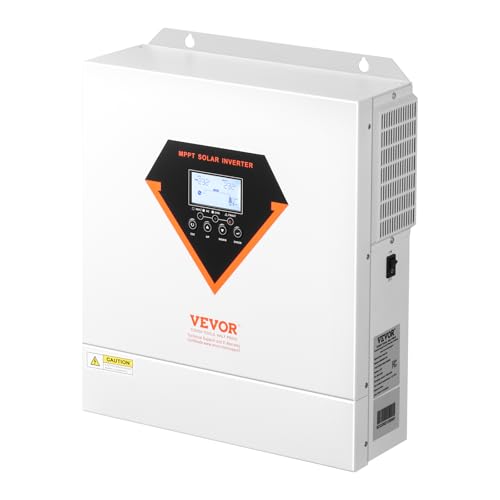
VEVOR 3500W 24V Hybrid Solar Inverter
Best for: 24V off-grid 220/230V systems
- Technology
- MPPT
- Continuous Wattage
- 3500W
- Waveform
- Pure Sine Wave
- DC Input Voltage
- 24V DC
- AC Output Voltage
- Single Phase 220/230V AC
- Remote Control
- WiFi module
This VEVOR unit combines a 3500W pure sine wave inverter with a 100A MPPT charge controller for 24V DC systems. It outputs 220/230V AC, making it suitable for international or specialized single-phase setups. The built-in WiFi module allows remote monitoring, though data updates every five minutes rather than in real time. You can adjust charging modes directly on the device. It weighs 13.5 pounds and includes lithium battery support.
- 3500W continuous pure sine wave output
- 100A MPPT solar charge controller
- Built-in WiFi for remote monitoring
- Supports lithium and lead-acid batteries
- Outputs 220/230V AC, requiring a transformer for 110/120V US appliances
- WiFi app updates system data every 5 minutes, not in real time
- 3500W capacity is lower than the 10000W option on this list
- You need a 24V DC to 220/230V AC hybrid inverter
- You want remote monitoring via WiFi
- You are using lithium battery systems
- You require standard 110/120V US output without extra transformers
- You need real-time data updates
- You are on a 48V DC system
Verdict: VEVOR 3500W 24V Hybrid Inverter suits users in regions using 220/230V single-phase power who need a 24V system with MPPT charging. It fits those comfortable managing voltage conversion for US appliances.

LiTime 24V 3000W Inverter Charger
Best for: 24V off-grid systems with solar charging needs
- Technology
- MPPT
- Continuous Wattage
- 3000W
- Surge Wattage
- 9000W
- Waveform
- Pure Sine Wave
- DC Input Voltage
- 24V DC
- AC Output Voltage
- 120V AC
This LiTime unit combines a 3000W pure sine wave inverter with a 60A MPPT solar charge controller in a single 24V device. It delivers a 9000W surge capacity and supports UPS functionality for stable power. The integrated LCD screen and RS485 communication allow you to monitor system data and protect connected equipment. It suits off-grid homes or energy storage setups requiring reliable solar integration.
- Integrates a 60A MPPT solar controller with the inverter
- Provides 3000W continuous and 9000W surge pure sine wave output
- Includes UPS functionality and multiple output modes
- Features an LCD screen for real-time system monitoring
- Supports RS485 communication for advanced system management
- 3000W continuous power is lower than the 3500W and 10000W options on this list
- Weighs 41.7 pounds, adding bulk compared to lighter inverter-only models
- Limited to 24V DC input, restricting compatibility with 12V or 48V battery banks
- You need a single unit that handles both solar charging and power inversion
- You have a 24V battery bank and want pure sine wave output
- You require UPS functionality for uninterrupted power supply
- You require more than 3000W of continuous power
- You are using a 12V or 48V battery system
- You need a lightweight, portable solution under 40 pounds
Verdict: LiTime 3000W 24V Inverter Charger is a compact all-in-one solution for users with 24V batteries who want integrated MPPT solar control. It fits those prioritizing solar integration over raw inverter capacity.
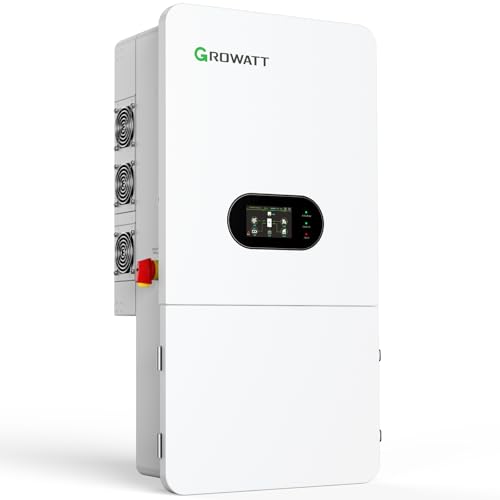
GROWATT 10kW Hybrid Solar Inverter
Best for: Whole-home backup with large solar arrays
- Technology
- MPPT
- Continuous Wattage
- 10000W
- Waveform
- Pure Sine Wave
- DC Input Voltage
- 48V
- AC Output Voltage
- 120/240V, 120/208V
- Remote Control
- App, web, WiFi, Ethernet
The GROWATT 10kW Hybrid Solar Inverter delivers 10,000W of continuous pure sine wave power for whole-home backup. It features three MPPTs for up to 15kW of solar input and supports split-phase or three-phase output. This unit includes a 10-year warranty and remote app control. It suits homeowners needing scalable, utility-grade electricity for grid-tied or off-grid systems.
- 10kW continuous pure sine wave output
- Three MPPTs with 15kW solar input capacity
- 10-year US warranty with local support
- Supports split-phase and three-phase configurations
- Remote monitoring via app and web
- Weighs 108 pounds, which is heavier than smaller inverters
- Requires professional installation due to complex wiring
- Limited to 48V DC input systems
- You need high-capacity solar power for a large home
- You want a long-term warranty with US support
- You are installing a split-phase or three-phase system
- You need a portable or lightweight unit
- You only have a small solar array under 5kW
- You prefer a simple plug-and-play setup without professional help
Verdict: GROWATT 10kW Hybrid Solar Inverter fits homeowners with large energy needs who require reliable, scalable power and long-term warranty coverage.
Specifications side by side
| Spec | VEVOR 3500W 24V Hybrid Solar Inverter | LiTime 24V 3000W Inverter Charger | GROWATT 10kW Hybrid Solar Inverter |
|---|---|---|---|
| Continuous Wattage | 3500W | 3000W | 10000W |
| Surge Wattage | – | 9000W | – |
| Waveform | Pure Sine Wave | Pure Sine Wave | Pure Sine Wave |
| DC Input Voltage | 24V DC | 24V DC | 48V |
| AC Output Voltage | Single Phase 220/230V AC | 120V AC | 120/240V, 120/208V |
| Remote Control | WiFi module | – | App, web, WiFi, Ethernet |
| Features | Pure Sine Wave | UPS Function | Pure Sine Wave |
| Intended Use | Off-Grid | Home, RV, Off-Grid | Home, Off-Grid |
| Voltage | 24V | 120V | 120V/240V |
| Wattage | – | 3000W | 10000W |
| Recommended Use | Off-Grid Systems | Off-Grid Systems | Off-Grid Systems |
| Included Components | Inverter, Lithium Battery | Inverter, MPPT Charge Controller | Inverter |
| Amperage | – | 50A | – |
| Current Rating | 100A | 60A | – |
| Battery Type | Lithium | – | – |
| Technology | MPPT | MPPT | MPPT |
| Dimensions | 12.1 × 4.13 × 14.4 inches | 12.2 × 5.31 × 18.3 inches | 17.3 × 9.43 × 28.3 inches |
| Weight | 13.5 pounds | 41.7 pounds | 108 pounds |
| Size | 24V to 230V 3500W | 24V 3000W Inverter Charger (60A MPPT) | 10000W |
| Color | White | Black | White |
| Model | EM3500-24L | L-HYBINV-24V3KW-T | SPH 10000TL-HU-US |
How to Choose the Right MPPT Inverter
Check MPPT Current Rating
The MPPT controller current rating determines how much solar energy you can harvest. A higher amperage allows you to connect larger solar arrays without wasting potential power. For example, the LiTime 24V 3000W Inverter Charger includes a 60A MPPT controller. This specification is critical if you plan to expand your solar panel setup over time. You should compare this number against your total solar panel output to ensure the inverter can handle the charge efficiently. Do not overlook this detail if solar charging is your primary power source.
Match Battery Voltage
You must ensure the inverter input voltage matches your battery bank exactly. Using a mismatched voltage can damage your equipment or prevent it from working entirely. Most off-grid systems use 12V, 24V, or 48V batteries. The VEVOR and LiTime models both require a 24V battery system. If you currently have a 12V setup, you would need to reconfigure your batteries or choose a different inverter. Always verify the input voltage specification before purchasing to avoid compatibility issues with your existing energy storage.
Verify Output Voltage
Your local grid voltage dictates the required output specification for your inverter. In the United States, standard outlets use 120V or 240V. The GROWATT 10kW Hybrid Solar Inverter supports both 120V and 240V outputs, making it versatile for whole-home applications. However, the VEVOR model outputs 230V, which is common in other regions but may require adapters for standard US appliances. Check your local electrical standards carefully. Selecting the wrong output voltage means your devices will not function correctly or safely when connected to the inverter.
Assess Wattage Needs
Wattage determines the maximum power the inverter can deliver to your devices. You need to calculate the total running watts of all appliances you plan to run simultaneously. The VEVOR provides 3500W, while the LiTime offers 3000W. These are suitable for moderate loads like refrigerators and lights. The GROWATT delivers 10000W, capable of handling heavy-duty tools or entire home circuits. Compare your peak usage requirements against these numbers. Choosing a unit with insufficient wattage will cause it to shut down under load.
Consider Physical Size
The physical dimensions and weight affect where you can install the inverter. Larger units with higher wattage typically require more space and stronger mounting surfaces. The GROWATT 10kW model weighs 108 pounds and stands nearly three feet tall. It requires a dedicated, sturdy location. In contrast, the VEVOR is much lighter at 13.5 pounds and more compact. This makes it easier to place in smaller off-grid cabins or vehicles. Measure your available installation space before deciding. Ensure your mounting area can support the weight of the chosen unit.
Frequently asked questions
What is the difference between MPPT and PWM inverters?
MPPT stands for Maximum Power Point Tracking, a technology that optimizes the energy harvest from solar panels. Unlike PWM controllers, MPPT adjusts voltage and current to ensure you get the maximum possible power from your array. All the inverters in this guide use MPPT technology to maximize efficiency.
Can I use these inverters for home backup power?
Yes, several models are designed for whole-home backup. The GROWATT 10kW Hybrid Solar Inverter supports 120V and 240V output, making it suitable for larger residential needs. It is intended for both home and off-grid use, providing reliable power for essential appliances during outages.
Do I need a pure sine wave inverter?
Pure sine wave inverters produce clean power similar to utility grid electricity, which is safer for sensitive electronics. The VEVOR 3500W and GROWATT 10kW models both feature pure sine wave output. This ensures your devices run smoothly without risk of damage or interference.
How much weight should I expect from these units?
Weight varies significantly based on capacity and build. The VEVOR 3500W model weighs 13.5 pounds, making it relatively light. The LiTime 3000W unit is heavier at 41.7 pounds, while the high-capacity GROWATT 10kW inverter weighs 108 pounds due to its larger components.
What battery voltage do these inverters require?
Most top picks in this list operate on 24V battery systems. The VEVOR and LiTime models both require a 24V input. However, the GROWATT 10kW inverter is designed for 120V or 240V output systems, so you must match the inverter voltage to your specific battery bank configuration.
Is MPPT charging included in all these models?
Yes, every inverter listed uses MPPT technology for solar charging. The LiTime model explicitly integrates a 60A MPPT controller. The VEVOR unit includes a 100A current rating for its charging system. This ensures efficient solar energy conversion across all selected products.

