As Amazon Associates, we earn from qualifying purchases. This means we may receive a small commission at no extra cost to you if you click through and make a purchase.
As an Amazon Associate we earn from qualifying purchases. Links on this page are affiliate links.
This anker solix c1000 gen 2 review looks at a 1,024Wh LiFePO4 portable power station. It delivers 2,000W continuous output and recharges in 49 minutes. The unit weighs 24.9 pounds and measures 15.1 by 8.2 by 9.6 inches. It features a 3,000W surge capacity and a 10 ms UPS switch. You get ten ports for connecting devices. This model is designed for emergency backup and off-grid use. The battery retains 80% capacity after 4,000 cycles. We examine how these specs translate to real-world performance for your power needs.
- Recharges fully in 49 minutes via AC at 1,600W input
- 1,024Wh LiFePO4 battery lasts 4,000 cycles to 80% capacity
- 2,000W continuous output with 3,000W surge power
- 10 ms UPS switchover keeps critical devices running
- Accepts up to 600W solar input for 1.8-hour recharge
Good fit for
This unit suits users needing reliable emergency backup for CPAP machines or laptops. The 10 ms UPS function protects sensitive electronics during outages. Its 1,024Wh capacity handles small home appliances or remote work setups. The 49-minute AC recharge is ideal for quick top-ups before tailgating or camping. RV owners and off-grid dwellers benefit from the 4,000-cycle lifespan. The compact size fits well in vehicles or small living spaces.
Who can skip it
Look elsewhere if you need high solar input beyond 600W. The maximum solar voltage is 60V, which limits large array setups. If you require more than 2,000W continuous power, this unit is insufficient. The 1,024Wh capacity may not support heavy-duty tools or large refrigerators for extended periods. Users needing multiple units simultaneously should consider the available bundle options. Heavy industrial use exceeds the intended emergency and outdoor design parameters.
Verdict
The Anker SOLIX C1000 Gen 2 offers fast recharging and robust battery longevity for portable power needs. Its UPS feature and high cycle count make it a practical choice for emergency preparedness and outdoor activities.
Key specs explained for you
Battery Capacity: 1,024Wh
This number tells you the total energy stored inside the unit. You can use this figure to calculate how long devices will run. For example, a 100-watt laptop would theoretically run for roughly ten hours. Larger values mean longer runtime, while smaller values suit short trips. You should compare this capacity against your daily power needs to ensure the station holds enough juice for your essential electronics during outages or camping.
Continuous AC Output: 2,000W
This rating indicates the maximum power the station can supply at any one moment. You can plug in appliances that draw up to 2,000 watts without tripping the unit. This covers most household items like microwaves or small power tools. Higher ratings allow you to run more devices simultaneously. When shopping, check this number against the wattage labels on your appliances to avoid overloading the system during use.
Surge Wattage: 3,000W
Motors and compressors require a brief power spike to start. This surge rating handles those initial spikes without shutting down. You can safely start refrigerators, sump pumps, or power tools that need extra starting power. The value is higher than the continuous output to accommodate this temporary demand. Compare this spec to the starting wattage of your devices to ensure the station can handle the initial kick-start required for proper operation.
AC Recharge Time: 49 Min
This figure shows how fast the unit refills from a standard wall outlet. You can restore full power in less than an hour. This speed is useful for quick top-ups between uses or during short power interruptions. Faster recharge times reduce downtime significantly. When comparing models, look for lower numbers here. A quicker recharge means you spend less time waiting for the battery to fill and more time using your power station.
Cycle Life: 4,000 cycles
This count defines how many times you can fully charge and discharge the battery before it degrades. A high number like 4,000 suggests long-term durability. You will retain at least 80% of the original capacity after thousands of uses. This longevity makes the unit suitable for daily backup or frequent off-grid trips. Compare this cycle count with other LiFePO4 models to gauge the expected lifespan of your investment over many years.
Design and build details
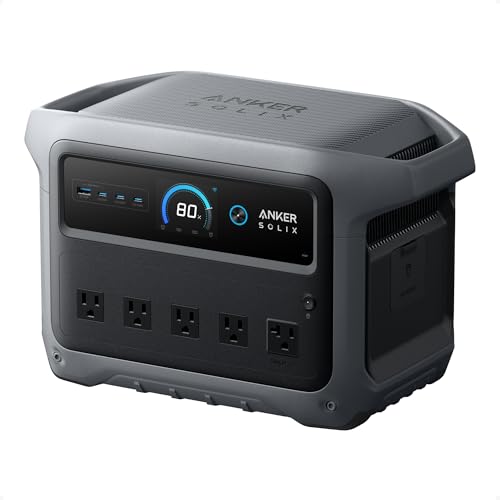
According to the listing, the Anker SOLIX C1000 Gen 2 measures 15.1 by 8.2 by 9.6 inches. It weighs 24.9 pounds. The unit is gray and uses the model number A1763. The manufacturer states it is 14% smaller and 11% lighter than similar models. This compact footprint allows you to carry it easily. You can store it in tight spaces. Moving it between rooms or into an RV requires minimal effort. The size supports its intended use for outdoor activities like camping or tailgating.
The battery chemistry is LiFePO4. This material choice offers long-term durability. The listing notes a cycle life of 4,000 cycles. After this many charges, the battery retains at least 80% of its original capacity. This supports the claim of a ten-year lifespan with daily use. The design includes a UPS function. This feature ensures under 10 ms switchover time. You can keep vital equipment like CPAP machines running during power outages. The build focuses on practical portability and reliable backup power. The included components are the power station, an AC charging cable, a quick start guide, and a safety card. The physical design prioritizes ease of transport and robust energy storage for remote locations.
Setup and everyday use guide
Setting up this unit is straightforward. The box includes the power station, an AC charging cable, a quick start guide, and a safety card. You do not need to install batteries or assemble complex parts. Simply connect the provided AC cable to a wall outlet to begin charging. The listing notes that HyperFlash technology allows a full recharge in 49 minutes at 1,600 watts. You can enable this fast-charging mode through the companion app. For off-grid setups, you can connect solar panels. The unit accepts up to 600 watts of solar input at a maximum of 60 volts. With solar power, the battery recharges in approximately 1.8 hours. This makes it suitable for remote locations or RV trips where grid power is unavailable. In daily use, the device powers up to ten devices simultaneously. It delivers 2,000 watts of continuous output, with a 3,000-watt surge capacity. This handles standard appliances and tools. A key feature for emergency use is the uninterruptible power supply function. It switches to battery power in under 10 milliseconds. This ensures sensitive electronics like laptops and CPAP machines stay running without interruption. The LiFePO4 battery chemistry supports 4,000 cycles. This means the unit retains at least 80% capacity after extensive use over many years. You can also manage power consumption using Time-of-Use modes in the app. This helps you avoid peak charges during high-demand periods. The compact size allows you to move it easily between rooms or store it in an RV. It is designed for both indoor backup and outdoor activities.
Before You Buy This Power Station
You should verify that your devices fit the available ports before purchasing. The listing notes ten output options, but you must check plug types and wattage limits for sensitive electronics like CPAP machines. This unit offers under 10 ms UPS switchover, which suits critical medical or work equipment. Consider your solar setup carefully. While the station accepts up to 600W from solar panels, you will need to buy compatible panels separately unless you choose a bundle. The included AC cable handles wall charging, but outdoor use often requires additional adapters. Keep the unit in a cool, dry place to maintain the LiFePO4 battery health. Compare its 1,024Wh capacity against other 1 options in this guide. If you need more runtime, look for higher capacity models. This station fits well for weekend trips or short outages, but large home backup may require multiple units.
Check before you buy
- Verify your device plug types match the ten output ports.
- Confirm your CPAP or laptop wattage stays under 2,000W continuous.
- Check if you need solar panels, as they are not included.
- Ensure your space fits the 15.1 by 8.2 by 9.6 inch size.

Anker SOLIX C1000 Gen 2 1024Wh Power Station
Best for: Emergency backup and remote work setups
- Battery Capacity
- 1,024Wh
- Continuous AC Output
- 2,000W
- Surge Wattage
- 3,000W
- Battery Chemistry
- LiFePO4
- AC Recharge Time
- 49 Min
- Cycle Life
- 4,000 cycles
The Anker SOLIX C1000 Gen 2 is a 1,024Wh LiFePO4 portable power station with 2,000W continuous output and 3,000W surge capacity. It recharges in 49 minutes via AC or 1.8 hours with 600W of solar input. This unit features a 10 ms UPS switchover and weighs 24.9 pounds. It suits users needing reliable backup for emergency use, outdoor activities, or remote work setups.
- Recharges fully in 49 minutes using HyperFlash technology
- Provides 2,000W continuous AC output and 3,000W surge wattage
- LiFePO4 battery lasts 4,000 cycles with 80% capacity remaining
- Offers 10 ms UPS backup for vital equipment like CPAP machines
- Weighs 24.9 pounds, which adds bulk for frequent transport
- Accepts only 600W of solar input, limiting off-grid recharging speed
- You need a fast 49-minute AC recharge for emergency prepping
- You require a 10 ms UPS switchover for sensitive electronics
- You want a LiFePO4 battery with 4,000 cycle life for long-term use
- You need more than 2,000W of continuous power
- You require solar input greater than 600W for faster off-grid charging
- You need a unit lighter than 24.9 pounds for easy carrying
Verdict: The Anker SOLIX C1000 Gen 2 fits users who need fast 49-minute recharging and reliable 2,000W output for emergency backup or remote work. Its LiFePO4 battery ensures longevity, though the 24.9-pound weight requires careful handling during transport.
Specifications side by side
| Spec | Anker SOLIX C1000 Gen 2 1024Wh Power Station |
|---|---|
| Battery Capacity | 1,024Wh |
| Continuous AC Output | 2,000W |
| Surge Wattage | 3,000W |
| Battery Chemistry | LiFePO4 |
| AC Recharge Time | 49 Min |
| Cycle Life | 4,000 cycles |
| Features | LiFePO4 Battery, UPS Function |
| Intended Use | Emergency Use, Outdoor |
| Included Components | Lithium Battery |
| Battery Type | Lithium |
| Dimensions | 15.1 × 8.2 × 9.6 inches |
| Weight | 24.9 pounds |
| Color | Gray |
| Model | A1763 |
Frequently asked questions
Is the Anker SOLIX C1000 Gen 2 good for camping?
Yes, the listing specifies it is intended for outdoor use. Its 1,024Wh capacity allows you to power lights, fans, or small appliances away from grid electricity. The LiFePO4 battery chemistry ensures safe operation in various environments, making it a practical choice for campers who need reliable, portable energy without the noise of a gas generator.
Does this power station work as an UPS?
Yes, it includes a UPS function. This feature provides uninterrupted power by switching to battery mode instantly if the grid fails. The listing notes a transfer time of under 10 ms, which protects sensitive electronics like computers or medical devices from sudden power loss. This makes it suitable for emergency backup in homes or offices.
How long does it take to recharge the C1000 Gen 2?
It recharges in approximately 49 minutes using AC input. This fast charging speed allows you to quickly restore power after a brief outage or before heading out for a trip. The rapid recharge capability is a key spec for users who need the unit ready to go without waiting hours for a full battery cycle.
What is the surge capacity of this unit?
The Anker SOLIX C1000 Gen 2 has a 3,000W surge capacity. This rating allows it to handle devices with high startup power demands, such as power tools or motors, which require more energy to start than to run continuously. This exceeds its 2,000W continuous output, ensuring compatibility with a wider range of electronics and appliances.
Is the battery type safe for long-term storage?
Yes, it uses LiFePO4 battery chemistry. This type of lithium iron phosphate battery is known for stability and a longer lifespan compared to standard lithium-ion cells. It can typically endure more charge cycles before significant degradation, making it a durable option for users who plan to use the power station frequently over several years.
How heavy is the Anker SOLIX C1000 Gen 2?
It weighs 24.9 pounds. This weight is manageable for most adults but requires careful handling during transport, especially if you need to move it frequently. The dimensions are 15.1 by 8.2 by 9.6 inches, which fits into many car trunks or storage spaces, balancing portability with the internal capacity needed for extended power needs.